“Write what you….” No.
“Write what you know,” is the oldest writing advice there is, as far as I can tell.
Did it ever apply? Does it still?
In a foundational, oblique manner, yes. If one has never once thought about writing before now, and is petrified at the prospect of starting, it’s the first light switch thrown in the darkness.
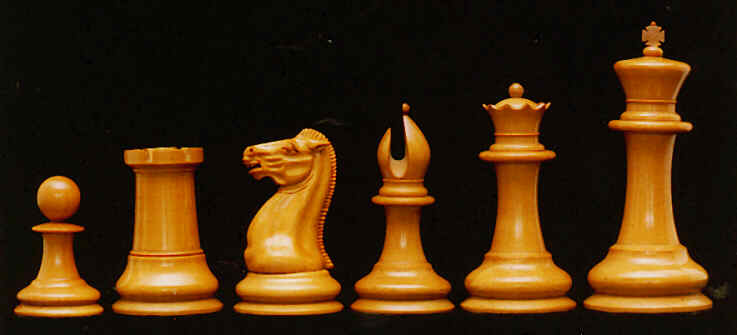
Beyond that initial crossroads of “try writing” and “never ever try writing ever” this well-worn statement is akin to telling a neophyte to chess, “just protect your king.”
Okay, that is the fundamental truth of chess play. Yet even if you lack all talent for the game, (as I do) you’re aware that two thirds of a player’s moves are not connected to protecting the king from direct assault. If “protect the king” is all the knowledge you have, you have nothing with which to work, even though it is the entire point.
“Write what you know,” is the first shove of the boulder down the hill. Yet knowing something does not a valuable topic make.
This is especially true in sharing our own experiences.
I have found that unless you are precious to the reader, or famous to the world of readers, nobody wants to talk about yourself as a starting/end point of a work. We know about nothing on earth more than our own lives and opinions, yet to focus our writing on this will bore everyone.
A better statement to launch a thousand writer adventures would be, “write what others want to know.”
Now that may be nothing more complicated than reader “wanting to know” the joke of your piece, of the twist in your thriller, or the catharsis moment of your story on a public radio hour. It’s all the same; a writer must provide what the reader wants to know, while remaining true to one’s self. The writing must come from a place of truth, or what one knows, but not simply be a mere recitation of “what you know.”
Now, how does a writer find a truth within them that can be transposed into a truth others want to know themselves?
Let’s put it this way; to continue the chess metaphor, determining this is equivalent to not only telling the chess neophyte to “protect the king,” but to do only in his head, without pieces or a board to keep track.
I wish it were simpler. The good news is, so do you, and in that sense you’re halfway to being a writer already.
What a writer truly knows is, how little they know.
- Posted in: Miscellany

 Ty Unglebower