Announcing Nazi Lavender, My full stage play now on New Play Exchange,
In the last few years of novel work, I have had less time to focus on or even mention my other writing. That ends today with the announcement of my play Nazi Lavender now appearing on New Play Exchange…a site that lets interested parties read script by up and coming playwrights for possible production. Here is the link.
All of the information about the play is there, ad I have mentioned it here before on occasion. I won’t repeat everything here, especially since coming up with taglines and marketing pitching for the submission drained me of what little daily commerce acumen I have for the day. Suffice to say, its themes of Nazi criminals and examination of our tendency as people to not recognize evil when it comes in a charismatic package are just as relevant, if not more so today than they were 80 years ago.

I am as committed to this project, which I have worked on and revised for several years now, as I am to any of the novels. But as it is a harder sell in person on the daily because it is literally a production instead of a guy mentioning his book to you, I felt a different tack was needed. Hence putting it on the NPE.
If you are interested in more, and especially if you are interested in staging a potential debut production, give the above a follow, and let’s see where it goes.
Seek Out Unknown Authors (Like Me)
Discoverability is an enormous factor in one hopes of even modest success as a writer, especially, (but not exclusively) for the indie writer such as myself. We hear it all the time:
Your stuff must stand out among literally millions of other options out there.
Well, yes and no.
If the reader (or consumer) is entirely unwilling or able to explore, or deep dive into the creative oceans that surround us today, you might need to be a unicorn just to be considered as a creator. More power so such one-horned legends.
But if we as a creative collective encourage consumers on the whole to investigate their options, to really delve into the weeds to find hidden gems, we increase the likelihood of grand discoveries. This is true not only for writers who very much long to be discovered, but for readers who want more options than merely the most easily detected possibilities at the front of the line.
To put it another way, I’d like to see consumers of all the arts, but readers in particular in this case, put in actual labor more often to finding new voices, ideas, settings, characters for their fiction-reading endeavors.
Now I want it to be a labor of love, naturally. Such an attitude may help me and other indie authors of limited means, true. This is not a mere selfish appeal however.
You see, just as we writers with smaller audiences are encouraged to “embrace the process” of creating even if it is never seen, (easier said than done) I encourage readers to embrace a new process of deeper introspection followed by more intense work at discovering the “less discoverable.” Delve into the process of not only discovering a new book by a new (to you) author, but one of grander consideration of your own tastes–a wading out into the marker but richer waters of the (near) anonymous content creators and authors out there.
Your chart toppers and Booker Prize winners are not going anywhere, so consider enriching your relationship with story, poetry, prose by leaning heavily, if only for your next few reads, into obscurities that match your preferences, where most of us authors reside.
You may find you want to stay, and I assure you there will be plenty of those of us unknowns that will welcome you.
Playing My Cards Write
Another dumb pun for a title. But relevant. For though I would not be so dramatic as to consider this an announcement, I am making a statement as to one of my projects for the year. Going back to my earlier roots or writing short story collections, usually of 10 or 15 stories, with a common theme of some kind. When I do so I enjoy the adventure of representing multiple genres and styles within such collections. (I last did this with Order!
This time around, playing cards will be the theme.
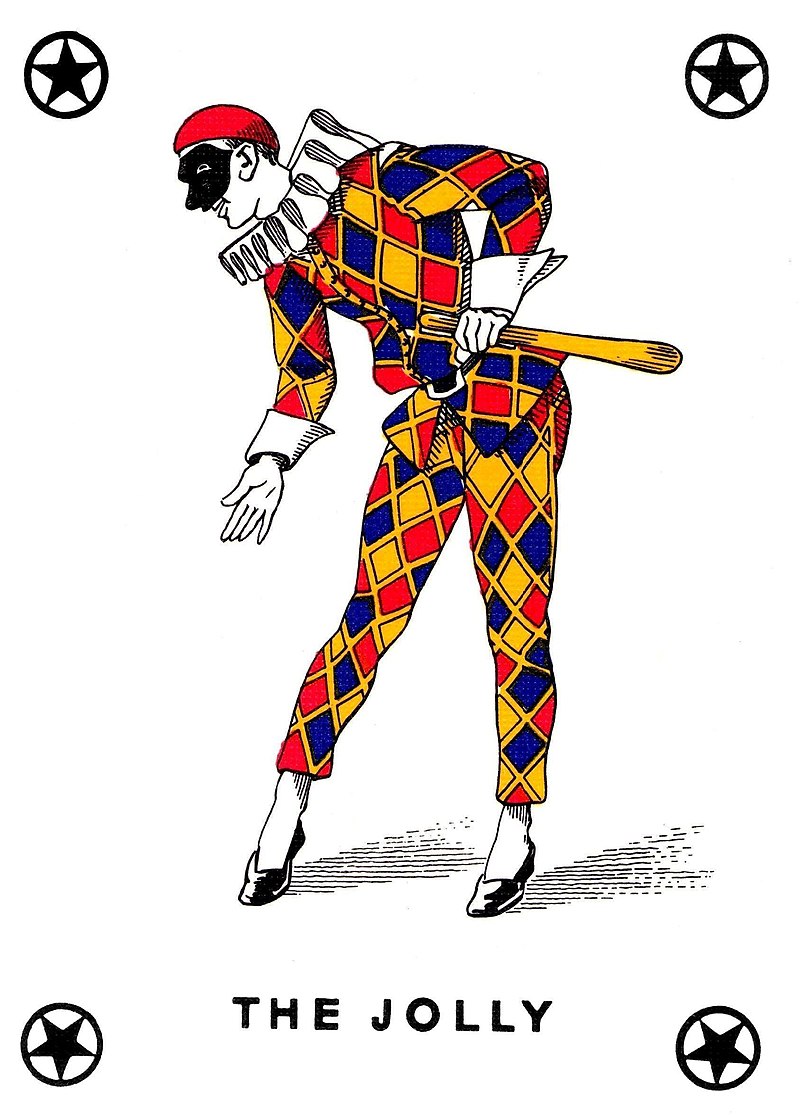
This is not even the first time playing cards have figured into my fiction. Murder. Theatre. Solitaire made use of them as a partial character trait. But then as now I have always enjoyed playing cards. I would not go so far as to call it one of my Autistic special interests, but I do in fact own close to thirty packs of playing cards, so it’s at least a bit of a “thing” with me.
Nothing has been drafted of this collection yet, and I have no publishing date to share with you now, other than “later this year.” So stay tuned to hear more details in the coming weeks and months.
I look forward to exploring the particular challenge that is a themed story collection once again, and I hope you will choose to read it is ready.
Crop Rotation in 2024
Though it be a bit late in the month for New Year’s sentiments, this is nonetheless my first post of the New Year.
Plans flucuate through the course of a year, but I can say with certainly that there will be no new novel this year. After a long, intense time spent with The Rubble and the Shakespeare, I will be dedicated this writing year to smaller (in comparison) writing projects. Smaller that is in the sense of fewer words per project than a novel.
There will be a short story collection coming later in the year, for example. More details on that coming later on as I get more underway with it. And perhaps some poetry. Not to mention other things here on the site that have no home anywhere else.
This is a bit of a change for me, as before covid I tended to write one novel per year. While I do not anticipate, and indeed do not wish for along a process for my next novel as my current one, I no longer feel one novel per year is my style going forward.
I think of it as crop rotation. The notion in agriculture that planting the same thing in a field year after year will ruin the soil and yield diminishing returns. But to plant something different each year for a while allow different nutrients in the ground to replenish, thus producing a healthier, more bountiful crop.
So I hope for my writing. Shorter, less intense works this year following a whole novel experience of the last several.
I offer this advice, humbly, to all creative types that may read this. You have a passion and you have a speciality, to be sure. But perhaps it will flourish to a greater degree if you spend a little time (or a lot of time) on a different creative act before embarking on your next project in your “speciality.”
May both my creative fields, and yours, be fertile in 2024.
Writing the Ship in the New Year
Happy (soon) New Year. Not so happy pun, but it is what it is.
As 2023 comes to a close, my mind for at least a few minutes, enters into the same thought process as most do at this time of year; what do I want the New Year to bring?
Plenty.
But for the purposes of this site, I will mention only what pertains to this site. Namely, it will be in essence rededicated.
In likelihood, and regular reader will notice little difference. It is mostly a content decisions that I made long ago and put mostly into practice this year already. Henceforth, posts will focus solely on writing and the writer’s life. Plus I will post smaller pieces such as stories or other creative writing that I want somewhere, but it not really a fit, or practical enough for my to self publish as a stand aloe book, nor to submit to publications. Knowing they will have a definitive home will hopefully encourage me to write more of them.
The ascetic will mostly be the same. Colors, template, all of that sort of thing. But I will be ridding the site of some of the extra bells and whistles, that I increasingly stepped away from over the last few years. That process has already begun, as astute observers may have noticed.
I will use search keywords for meta data for the barest of SEO activity, but I will no longer make use of “categories” for specific posts, and will have fully dispense with that menu soon. It felt like the perfect thing to do when I started my website, when I foolishly thought I would have many more readers than I do, and that the key in making that happen was writing on multiple topics on a regular basis. (The previous incarnation of this site, which you can still see entries of, was a blood dedicated to my “unusual” thinking, or being “too xyz” for the world….a condition I later learned was in fact my Autism.)
Now I prefer to take a somewhat more focused approach to my content, and the most logical facet of my life, (now that I have spent the better part of this year writing about Autistic traits within the writer’s mind) is writing itself.
To have been keeping a website for so many years only to contract as opposed to expand may go against the expected trajectory of the internet. But when have I followed the expected directory, especially as a result of mere expectations?
The “My Books” page on this site, though it may get a visual overall at some point, will remain, with UBLs to direct people where to buy them.
So, here’s to a step back of sorts in order to spring forward further. This site will now officially be what perhaps it always should have been all along: focused on my thoughts on writing, and pieces of writing itself.
Happy New Year, and happy writing. See you in 2024.

 Ty Unglebower