Yes, Virginia, It Is Worth It. Usually.
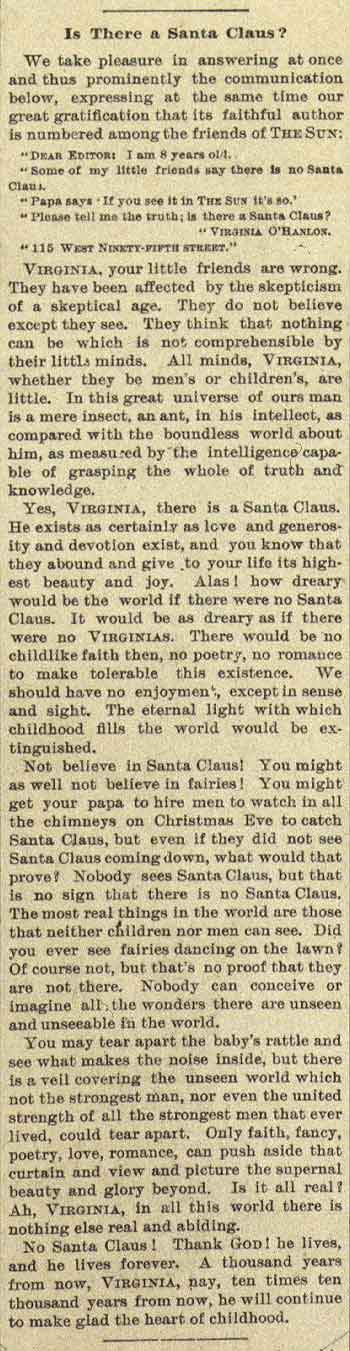
For several years around this festive time of year, I reposted a thought piece of mine on “Yes, Virginia, There Is a Santa Claus,” the famous New York Sun editorial from the late 1800s. I considered it, and still do, one of the greatest opinion pieces ever written in English. I stand by the claim. If somehow you have not read it yet, do so. And though last year I changed things up a bit, you can find my original thought piece reposted just about any years on this blog around late December.
The gist of it was how a single artistic effort by someone who shows up and gives a damn can leave a lasting impact far beyond anyone could possibly imagine. The effort and time put into the piece, (despite the absolute fact that it was part of the writer’s job) makes me think of my current novel The Rubble and the Shakespeare. (Now available at all major ebook stores by the way.)
I’m not by any means predicting I have written something destined for the same sort of transcendence as the Francis Church editorial. In fact, the parallel I am drawing between my novel and the editorial has nothing to do with my writing it per se It relates to some of the plots lines within the book.
In a half-ruined city still recovering from war, a man is asked by a friend to help him stage possibly the first ever Shakespeare production in the city’s history. (It was banned under the previous Regime.) Resources, people, venues, and other things must be secured and maintained in order to accomplish this. But in a place where sometimes food itself arrives late, and the cafe now serves coffee only, are the artistic and cultural endeavors worth the time and energy it will take to present in a vacated building something like The Tempest?
That is a question the main character attempts to answer throughout the book. In fact it is one of the central questions of the entire story—one I hoped to present when writing the novel in the first place.
And of course one that neither my novel, nor myself can answer for you. For myself the answer is of course, yes, or I would not write any of my novels. But one reason I usually answer yes to that question, (thought thank God I am not in a war torn environment) is the lessons learned from Yes, Virginia. Not so much or at least not only the Santa aspect, but the creation aspect. When I think that any given one of my creations could change lives, and when those in my novel try to contemplate the same thing regarding a theatrical production, “yes” is not only the fair answer, but it is the most hopeful, human one.
Midwinter Night’s Read
I think of literature and books around Christmas time. Despite lacking the reading speed to be a voracious reader as they say, I nonetheless associate the holiday season with both giving and getting books. (and hence shopping for them.)
Iceland has a deeply held tradition of jolabockaflod, or book flood, wherein books are given on Christmas Eve and read deep into the night before bed. So despite having no Icelandic blood (that I know of) the connection between the holiday and books gives me something in common with the Nordic nation.
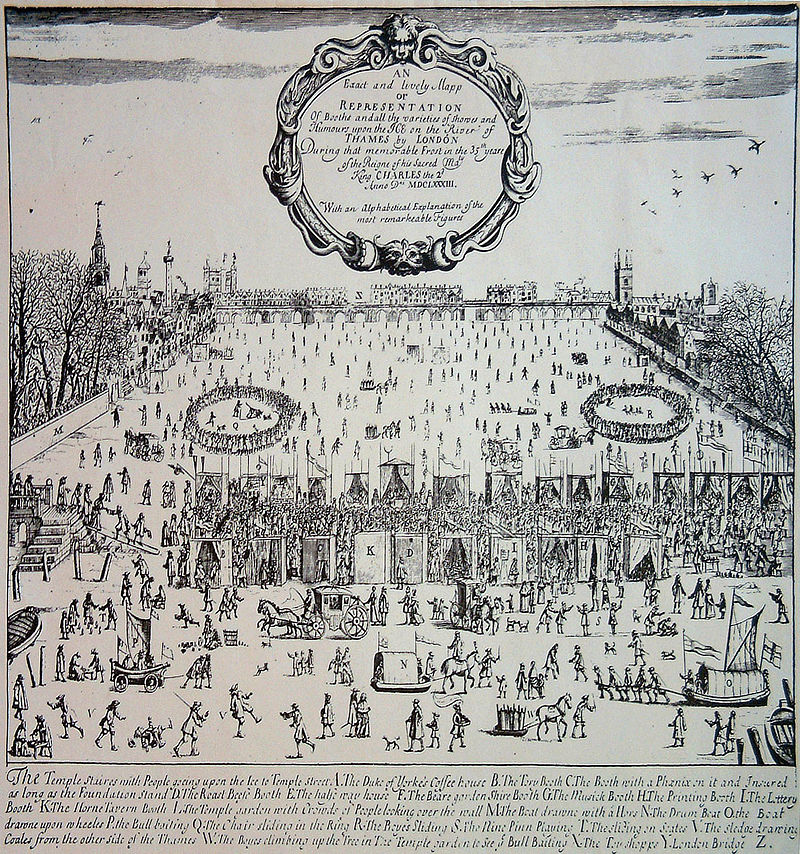
Winter as a hole, not merely Christmas seems the ideal reader-oriented time. Fall as well, but moreso winter I dare say. And while my latest novel, The Rubble and the Shakespeare does not specifically mention Christmas, it is set during winter, which I think adds to the creative notion of putting on a play. We are compelled to look more inward during the chill of the seaaon, and find our greatest connection to our imaginations. My story would have worked in any season, but winter, in a crumbling city brought out the natural human instinct, (as I have seen it), to create.
So if you feel as I do, download my novel, light a fire if you have a fireplace, and join your new friends in a winter surge of creativity. Just go to My Books and follow the purchase links.
Book Launch!
Well, the day has arrived, friends. The Rubble and the Shakespeare is now live on all major e-retailers. I have entered it into my (admittedly) rudimentary My Books sections here on this website. It gets the job done, as it does for my other books, until something better comes along. Feel free to click on the title there to find your preferred e-store.
For today, I will say no more about the nature of the story, nor the nature of the process of writing it. That I have covered quite a bit over the last few months. And there will be more thoughts and sharing to come, as part of my promotional attempts. But for today the finished product is out there, waiting to be downloaded for $4.99. It joins the long line of books I’ve written and published, and the out-of-sync feeling of it being completed is no different for this volume than for any of the others. One day, it is done. One day it is for sale to the world. For my newest novel, that day is of course today.
My thanks for any support you may have already, or will give me as I offer this book to the world. The publishing and writing is over. The promotion and information aspect continue.
Similar Titles to The Rubble and the Shakespeare
A common, and perfectly logical way to promote a new novel such as my novel is to compare it to other works. What does it resemble? It’s an efficient if not foolproof way to suggest to readers the kind of book you’ve written.
As with any marketing strategy, I face a personal challenge when proceeding.
I tend to read fewer books in a year than is fashionable these days, due to my overall reading speed. As you can imagine, this means I have fewer reference points for comparison than those who devour books with the speed of a demi-god.
Not only that, I tend to choose my next read based not on how new a title is. I myself will pick up a book if it happens to be compared to one I’ve already enjoyed, but usually the choice is based on such things as word of mouth, happenstance, searching for novels about whatever I am fixated on a given day, or even just stalking the library shelves. When you choose titles in this way, you are just as likely to “discover” a book from 20 years ago.

My list of completed book spans decades and various genres. You may or may not have heard of many of the novels I’ve read and enjoyed.
Still, I’ll try to mention a few books I think accomplish similar things to The Rubble and the Shakespeare. In no particular order, here are four:
–Virgil Wander by Leif Enger. (2018)
This recentISH novel is, about a man who loses his memory and goes on to manage the movie house of a local failing midwestern town. Stacked with well drawn characters and free of the outlandish for most of its pages, this is a story about decent, diverse people getting to know one another under circumstances that are only slightly askew from the every day. A found-family vibe of community, with nods towards the power of imagination.
My upcoming novel is not quite as somber as this Enger work tends to be in places. Still, if you read and enjoyed this, I’m reasonably confident you’s also enjoy The Rubble and the Shakespeare.
–The Black Tower, Louis Bayard (2014).
This was the first of several Bayard books I’ve read, and thus far my favorite. This historical fiction and mystery/thriller is, I must point out, much more complex than The Rubble and the Shakespeare, because it is a different genre doing different things. However, much like Virgil Wander it is filled with what I found to be memorable characters that charm. This is particularly true of the protagonist of this first-person narrative. (My book is also first person this time around.)
I chose this one because like my novel, it maintains humor even in darker situations. Once more, the subject matter is more intense at times than I intend my story to be, but I hope the humor I’ve spread throughout is just as successful even if lighter in nature than that of Bayard.
–Legends and Lattes, Travis Baldree, (2022)
I will admit upfront that this is the outlier. This very recent and popular work is in the high-fantasy genre, complete with orcs and magic and trolls, etc.
The Rubble and the Shakespeare is quite removed from such things, for certain.
So why include it? Because the intentional selling point of this tale was its low stakes compared to its “high vibes.” A character-driven fantasy story free of quests and battles so common in the genre. That was the point. My novel has more stakes than Baldree’s. And the vibes are not fantastical. But like this 2022 bestseller, I’ve aimed to make atmosphere and characters the pillars of my story, allowing actions and conflicts to occur in their orbits as opposed to in their faces.
I’m sure there were other novels with a similar approach that were not as fanciful and would have made a better comparison, but I’m sticking to those novels I’ve actually read and enjoyed. Both this and Rubble embrace plot simplicity.
–A Whole Life, Robert Seethaler (2014)
Closer to a novella in length than a novel, I read a translation from the original German. This piece, despite being more literary than The Rubble and the Shakespeare aspires to be, was an easy read, and deeply atmospheric and personal. Introspective. It is the interior nature of this work combined with the mostly wintry, frigid environment (the mountains) that lands it on this list. Far fewer characters than my own first-person novel, and again, more somber in tone, I nevertheless recall certain similarities between Seethaler’s Andreas and my own Dimitri.
In case you missed the pattern, memorable characters saying and thinking thoughtful things are a thread that runs through the above novels, and, I hope, through my own. And while the purpose of this list was never to suggest I’ve written something superior to the work of these authors, I like to think that there is some noteworthy overlap in quality, theme, style, tone, or all of the above.
I hope you will download a copy yourself, priced at $4.99 once it is available five days from now.
The Rubble and the Shakespeare Almost Wasn’t
My upcoming novel, The Rubble and the Shakespeare will be officially released on the 27th of this month. I have spent more time writing, (and long periods not-writing) this novel than any of my previous works. I’ve gone into the reasons why in previous posts, but suffice to say I am excited to finally have it out there for purchase.
Yet despite taking so long, I nearly waited even longer to publish it. Despite how much of a drag on my mind that choice would have been, I pondered a delay because of the “rubble” part.
It’s difficult to recall now, but there was a time when neither the Ukraine nor Gaza were experiencing invasions, bombings, destruction, and so on. It was at such a time when I began writing this novel.
Then Ukraine happened. And more recently the Gaza mess started up. Needless to say, much of both areas now lie in literal rubble. This novel will come out in tensions across the world are hitting a peak over the Gaza bombings especially. Because I didn’t want to give the impression I was capitalizing on these events to sell a book, I wondered for a time if I should hold off on release.
I had decided to go ahead with it once, in wake of the Ukraine situation not long before Israel business of 2023 began, and I considered the topic all over again. Perhaps, I thought, I should at least change the title to not include the word “rubble”?
Book covers had been made, and marketing underway with that title, and I opted to leave it as is. A minor problem compared to those living the hells I have mention above, but nonetheless an issue for this author to consider.
It’s obvious by now that I chose to release the novel as scheduled.
The story involved a city rebuilding from a war, a revolution that ultimately overthrew a longstanding tyranny. The setting is now at peace, but still rebuilding. In the end, that is why I moved forward: rebuilding.

The story focuses on a Shakespeare play, the first in ages to be permitted in the country in question. On one hand, culture and art are their own reward in a time of rebuilding. Such is the position of Otto, the second most important character. Our protagonist, Dimitri, represents the other side to a degree…that maybe now is not the ideal time to explore flights of fancy such as the arts. He agrees to help Otto because of their friendship, not because of a devotion to culture.
Predicably, there are issues, plenty of them, in mounting a production in the middle of such an urban mess. Yet this is a story, if I have done my job, or what happens after the destruction is over. When we physically dig out of rubble and debris, do we not also have to dig our spirits out of confinement? Do we let some shit in the game squelch our attempts?
An individual must answer these questions for himself, but I I have told this story in order to present the questions to a set of characters. (You will of course have to read it to see how each of them responds!)
The point is, if I opted not to share this story now, in the midst of tragedy throughout the world, I would in a sense betray the very theme I hoped to establish in the first place: that there are times creativity and art still matter in the world to some of us, even if not to everyone.
And so both the title, and the release date for The Rubble and the Shakespeare remain unchanged. I hope you will read it, but even more than that, I hope that those in troubled places throughout the world will eventually get to the point where they to can ponder the arts and imagination once again…as they rebuild.

 Ty Unglebower