The Autistic Writer: Ableism
Ableism can refer to a hateful, dismissive attitude toward those with disabilities. Viewing such people as somehow broken, or worse than that, subhuman, is ableism.
Ableism also manifests in a refusal to make accommodations, especially in the public sector with use of public funds, for those with disabilities. Buildings, parks, schools, built with little to no accessibility for those in wheelchairs for example display an ableist mentality at work.
Yet another, more subtle version of ableism poisons society. It is the assumption that a person with disabilities either isn’t in fact disabled, or that they are otherwise capable of overcoming their disability if only they put their mind to the task.
Level 1 (“high” functioning) Autistics such as myself experience this type of ableism most often.
Yes, even in the writing world. Or, perhaps I should more specifically say, the marketing and publishing arm of said world. For upon closer examination, despite gradual changes, much of the advice, many of the expectations of author success are rooted in ableist approaches.
“You’re well-spoken, obviously highly intelligent. You shouldn’t have any problem at all.”
Such was the assessment of every state-employed job development counselor I had for 3 years. Not one of them landed me so much as an interview, and more than one of them said that my struggles with their suggestions made no sense.
I no longer work with the state job development agency in question, but their underlying ableist mentality runs parallel to the societal structure within the author community.
Consider the following advice I often received in my excruciating efforts to secure employment:
Cold calling. Mingling. Introducing myself to powerful people, offering to help them solve a problem for free. Attending conferences and workshops. Glistening resumes and practicing both 30 and 60 second “elevator pitches” in the mirror every night. (“You’re an actor, you’ll be great at that!”)

If you haven’t caught on by now, much of the same expectations are in place when it comes to book marketing and promotion, for both the self-published author and the more “traditionally” published among us.
I’ll let you in on a bit of a secret that isn’t; it’s no more practical for me to do these things in pursuit of book sales and networking among fellow creatives than it is for the sake of a job.
Yet as with job hunting, particularly in the United States, the very DNA of making one’s way as an author, the blueprints, the essence of making a name for one’s self as a writer, regardless of talent, is fused with a neurotypical worldview and laced with ableist thinking.
Notions of pure capitalism and gregarious, extroverted, charismatic interaction with society at large are offered up, if not foisted upon the writer as the only path to success.
Other than pure capitalism, none of the above strike me as particularly wrong. Many ride the wave of such an approach with varying degrees of ease, into success. My beef is with the assumption that because of “the way of the world” there is zero alternatives for those that struggle in the particular way writers such as myself struggle. I’m angered with the binary of “do these things, or give up writing.”
And yet, because I am “smart” and I “don’t look disabled,” I should have no problem doing any of it. Just a matter of trying harder, and getting out of that good old comfort zone.
People on the Spectrum do manage to thrive with such strictions. For the millionth time on this blog alone I will restate that Autism manifests differently for everyone. However, should those on the Spectrum, even those who manage to “muddle through” such constraints be ignored? Should their stories be untold on a wider scale because they suffer from certain crippling anxieties and confusions?
Of course they should not. Not anymore than someone who cannot walk should have to crawl out of their wheelchair and through the front door of an establishment. That would be unconscionable.
Let’s open our minds to the struggles of writers with different sets of disability. Let’s not be ableist in our consumption of the written word.
The Autistic Writer: Loneliness
The literal process of writing is a solitary act. Even if you are collaborating on something with another author, or battling it out in the proverbial “writers room,” ultimately, even if only for a few minutes, you write alone. (Even with others present.)
The very nature of Autism is the tendency to turn inward. (It’s the original nature of the term, after all.) The vast majority of people on the Spectrum either don’t mind being alone, or actively prefer it.
That doesn’t mean those with ASD cannot ever be lonely. I myself am in fact usually lonely. For not only am I Autistic, I am, as you know, a writer. Two very much “by-yourself” identities in one.
If I spent the lion’s share of my free time doing something like roleplaying games, or if I had a career in event planning, I must definitely could still feel lonely. At the same time the nature of those two lives not only provides but requires a certain degree of connectivity with other people. Interaction, even superficial, is a must, thereby, through sheer statistics, increases the chances of meeting a wide variety of people, which in turn can combat feelings of loneliness.
Writers have the occasional writing group, which I find hit or miss when it comes to socializing. But most writers in most writers groups are not Autistic either.
Don’t get me wrong, the chance to kibitz with others who have at least a notion of the nuanced, frantic, sometimes crushing life of a writer is important. One does however become weary of discussing the very things that one spends most of one’s energy on when alone, though.
Film buffs often agree that making a high-quality movie about writing is in essence impossible. Good films about writers exist, but they usually focus, ironically, on aspects of the life in question that are outside of writing. Throw in montage of the protagonist pounding away at a keyboard, complete with erasing, or depending on the era, ripping the page out of the typewriter and balling it up before throwing it across the room.
Then it’s back to the drug/romance/money problem to drive the narrative.
It’s because, as I said, writing is an internal struggle. Internal joy. Internal adventure. But internal, regardless, and how do you present that visually? One must engage the audience with “writing adjacent” activities and moods.
Not being a filmmaker, and being Autistic to boot, therefore can be an isolating calling.
It absolutely has advantages, as I have described in these posts many times. When I finally get focused on a project, little can pull me away from it, and the quiet of not having a social life to commit to becomes an advantage.
It’s just that IO have nobody to talk to about it. Or better said, I have nobody to talk to about anything else but, much of the time.
The Autistic Writer: Perfectionism
Autistic people of all stripes are often acutely aware when something is out of place, not as it should be. They share this trait with other neurodivergent types of course; obsessive compulsive disorder is a prime example. Nevertheless, when it comes to Autism this adherence to expectations often focuses on specific experiences or components of one’s daily life, not necessarily on every aspect of same. (Though as always there are variations.)
For a creative Autistic, the artist in question sets both the standard of the creation, and very much detects when the reality doesn’t match same. A healthy aspiration towards improving is crucial for artistic evolution, of course. Pride in one’s work.
However, a too rigid set of expectations for one’s self and one’s work, one that delays creation and stymies productivity is perfectionism.
Any self-aware creative, Autistic or not, will confess that perfectionism is in fact a losing battle in the end when it comes to the arts. No art is perfect. In some ways no art is ever so much as truly completed. To shackle one’s self to perfection runs the risk of destroying the artistic impulse within one’s self.
For an Autistic writer like myself, this means keeping at bay the temptation for one more edit, one more pass over, one more rewrite of just the first five pages. It isn’t quite there, but could be if I just do it again.
And again. And again.
It bares repeating that one need not be on the Spectrum to be a perfectionist to harmful levels. Autistic perfectionism however threatens to define one’s entire self worth, the acceptability of one’s entire daily life based on whether or not a creation is exactly what we see in our heads before we start.
The key to preventing such a mindset from swallowing us whole is to measure the quality of the project by how much work we have put into it, how much energy and emotion and passion…and then very intentionally by a certain time, let it go.
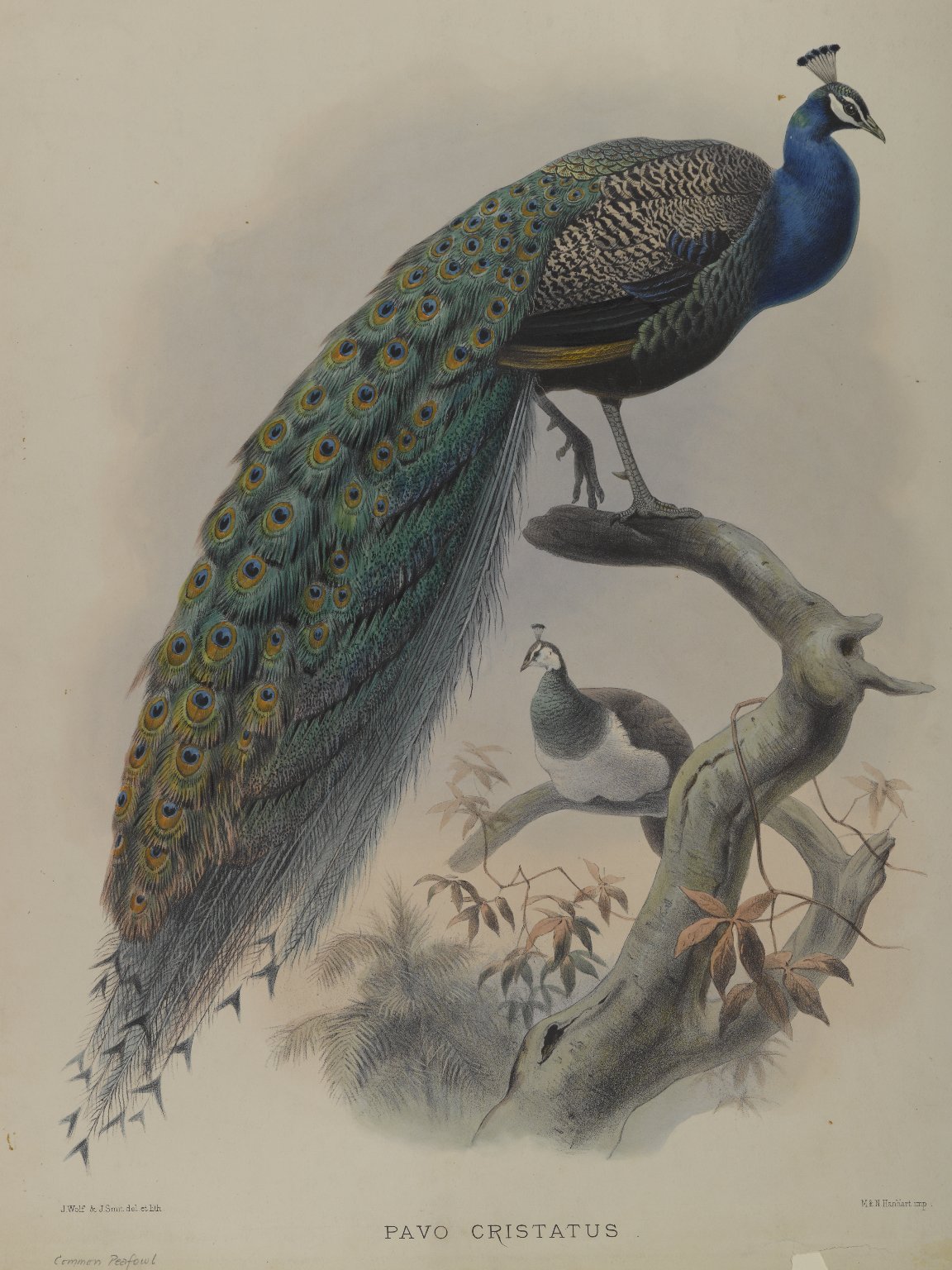
“Close enough,” sounds too lazy to adopt in full for this concept, but for lack of a better term, I will use it. Because very few things, fewer people in the world attain the level of mastery those with ASD sometimes expect of themselves and their contributions. We can always arrange a bookshelf of living room furniture to be exactly what we want. The lion’s share of being an artist is recognizing when you have created as much beauty and power as possible, and accepting that beyond a certain point, (there is not formula for knowing exactly when) we are painting a peacock.
I am not my work. I love my work, and it fulfills me when other people love it. I am proud of what I produce and will never put my name on anything that falls short of what I can do without killing myself.
But my work and myself are not the same thing. I think the inclination to feel otherwise is common for Autistic creators because so much of the rest of the world is out of sync with who we are, and we think our own creations must be exactly what we demand them to be.
More difficult than the writing itself is the moment when as an author I say of the project, “it’s enough.”
And I am enough.
The Autistic Writer: Tropes and Genre
Arbitrary rules and standards are an excellent way to drive Autistic people nuts.
Routine? Predictability? Keeping to an agreed upon schedule even for social activities? By and large we love those things. But going through with a process, a label, a system, or a guideline simply because “that’s the way it is”? You might as well ask those with ASD to stick our own heads in a toilet.
Often we get in trouble as children for asking authority figures “why?” Authority figures, teachers and administrators especially don’t like that question when it comes to instructions. Because I’m in charge, is likely the nicest answer you’ll get.
Even then, an answer to why would go a long way for those on the Spectrum. Explain the regulation to us, and we might just see its usefulness. Even if we don’t, we will be far more likely to follow it if we see a reason behind same.
This comes into frequent play for me an Autistic writer in two major ways.
To begin with, the idea of fiction tropes. A trope is something that has been used so often within a type of fiction that it is in fact expected of you. It has fallen off somewhat, but a longstanding trope in just about any fiction that wasn’t literary was the “need” for at least one brief sex scene in your novel. If a cis male and cis female exist within your story, one or both of them should be having sex before the story concludes. This was a trope for decades in the publishing industry. It would have made no more sense to me 50 years ago than it does today, and I would bristle at having to follow it.
If I wanted a sex scene, I would have written one.
But such were expectations.
I get it. Genre. Genres have tropes. Personally I don’t understand why a genre needs such tropes, if the theme and the setting match otherwise. Murder mystery readers expect a body before chapter three. A trope I have followed in my only murder mystery novel. But nobody has explained to me adequately why it isn’t truly “mystery” if the body doesn’t show up until chapter 8.
“Such is the genre.”
Which brings me to the second major way unexplained expectations weigh on me as an Autistic author: genre itself.
Fledgling writers are told to remain in a genre, no matter how often they write. If you write sci-fi first, keep writing sci-fi, at least under that name. Short stories, novels, movies, whatever, but pick a genre and be known for it. The key to success.
Why? I write fiction. The fiction I want to exist at the time of launching the project in question. There is usually a bit of fantasy in my work, but my up coming novel has none. My aforementioned murder mystery had none. I’m not flipping the bird to consistency here, but I simply don’t like being held to seemingly arbitrary expectations, by the industry, by other writers, even by readers. I have never seen evidence that staying within a narrow genre sells more books for me. Even if it did, would I give up the stories that are in me at any given time because they didn’t fit the genre attached to my name?
I confess, most marketing strategists would likely tell me I should do so. It establishes my “brand.”
To me, my brand is storyteller that, as my website says, “Shifts the Everyday a Few Inches.” I can’t imagine being moved to tell a tale but opting not to, leaving it fade within me because it’s not following tropes or genres.
Sorry, teacher. I’m not in school anymore and I don’t have to follow a rule of writing “just because” anymore.
The Autistic Writer: Info Dumps
Info dumps. Anyone can do it, but it is often associated with Autistic people. The slightest chance to mention a special interest or a recent intense study and boom…a person on the Spectrum will share anything and everything they know about same, sometimes to their detriment. (It tends to put off people who are unaware of why it’s happening, or otherwise don’t care about the topic.
Thanks to years of masking, I don’t info dump much these days. I will admit I probably did so when I was younger, though, before I knew about my ASD. I was made to feel weird or annoying, or clearly out right ignored by friends and family when I did so that a callous developed so to speak, and I stopped sharing the vast majority of what was on my mind. Now it is second nature to refrain in from info dumping, even about my special interests, in most situations.
The tendency lives on stronger in my writing.
For most people, a book, a novel in particular, becomes bogged down and more difficult to read when filled with “purple prose” and labyrinthian back stories and prologues. The flowers of such language tend to suffocate the reader. It works and is praised in plenty of books of course, but as a rule of thumb for books, less is more.
A defining aspect of my revision process is making sure I am not telling the reader too much at one time. I have on occasion experimented with fiction wherein I let myself, as author, tell everything to my heart’s delight. I don’t regret it, but as I said, it was an experiment. In most cases I avoid what could easily become me explaining every thought, question and emotion a given character has during any given scene.
And it is thought and emotion, explanations of motivations and fears where I tend to info dump if I am not careful. It may not be “info” in the strictest sense of the term, but as I have spent much of my life being thwarted from full expression of my feelings, if not outright mocked for trying, I suspect those tendencies have spilled into my fiction’s early drafts. Hell, maybe even in later drafts depending on one’s personal preference, though it’s always pared down by the time you read it vs when I wrote it.
Not so much with descriptions, for whatever reason. In that case of description, I don’t even think Autism enters into it. Rather, Autism doesn’t affect it as much. I tend to relate to people and situations in terms of how it feels to be present. My sometimes-freakish memory for detail from long ago times in my life is based on the emotion the recalled days provided me more so than anything else.
At this point in my life, I confess to not often trusting other people to fully listen to what I am saying, or to seek full understanding of my feelings. I’ve gotten used to such distance from most of humanity. I do my best as I write fiction, however, to trust my readers to understand what is implied, so long as I have done my job in writing the circumstances well.
That means keeping it short, but always authentic, when writing.

 Ty Unglebower