The Autistic Writer: Results and Black Holes

Subscribe to continue reading
Subscribe to get access to the rest of this post and other subscriber-only content.
The Autistic Writer: (Not So) Hyperfixation
A majority of people on the Autism Spectrum experience what are called hyperfixations. These are concepts, activities, or other stimuli to which the person pays concentrated, prolonged and in depth attention, often at the expense of noticing anything else while “zoned.”
Some hyperfixations are present in an Autistic person for a lifetime, while others come and go over time.
A similar bit not identical concept is known in the Autism world as a “special interest.” In this case, the passion for the subject is equally intense, but to participation/consumption of it is perhaps less noticable, or more “moderate” as the rest of the world defines the term.
Almost anything can be/become an Autistic hyperfixation/special interest, writing included.
For me, however, this isn’t the case.
It’s true; I am an Autistic writer who doesn’t hyperfixate on the act of writing.
Ironic? Perhaps a little. And to have such a hyperfixation may have greatly increased my productivity over the years. (Though this is no guarantee.)
That being said, perhaps it is for the best that writing doesn’t draw the lion’s share of my life all of the time, everywhere.
What’s interesting about this observation is that even before I was diagnosed with ASD, I considered myself a writer. Yet I bristled at the notion that writing should be an all-consuming obsession. This actually runs counter to the advice I discovered, especially online early on about the life of a writer.
“If you can imagine doing anything else with your time, anything at all, go do it. You’re not a writer.”
I realize that this sentiment deals partially with the notion of making a living as a writer, as opposed to just writing at one’s own pace. Nevertheless, it is a limiting philosophy, and one I hope writers of all types refuse to take to heart.

If you ask me, a writer should have at least one proverbial foot in the real, outside world, even if the rest of him is within his own personal Muse-populated mental metropolis. Being lost in such a place sounds at first blush like a great escape. To a certain extent suppose it would be. But if we vanish too far into our own thoughts, obsessed with writing and creating sentences to the point that we experience little else, what are we writing about in the end? To whom are we writing? Why waste the ink, if we can just compose epics within our head?
If you think this post sounds leans more toward the writing end and less toward the Autistic angle, you are correct to a point. But I wanted to address what has become an unfortunate stereotype of the Autistic genius, cranking out masterpiece after masterpiece merely by taking a few minutes to file reports from within our imagination where we lie ensconced.
Not only is this trope, (popular in Hollywood) woefully inaccurate in terms of the writing process, it is offensively simplistic as pertains to the Autistic experience overall; we are people, not prophets. Not myth and not magic. And even if some of us do hyperfixate on our writing, those of us who have even the slightest desire to communicate legitimate thoughts to the world realize it cannot end there.
As this series oft hath shown, my Autism influences my writing. But it doesn’t write it for me, in a vacuum anymore than my hand, while the rest of me sleeps could produce this article.
If you are reading this, hopefully you already were well aware of this. Yet if everybody knew it, I wouldn’t have been motivated to write this week’s entry in the first place.
The Autistic Writer: Unconventional Perspectives
Though in this series I have explored certain challenges Autism presents to writing, I’ve never suggested that being on the Spectrum should preclude one from being a writer. (For obvious reasons.)
If nothing else, I hope this Autistic Writer series stands as a testament that there is nothing intrinsic to ASD that makes one de facto poor at writing.
Nor, would I say it being Autistic an automatic advantage to the writing life across the board.
There are however certain Autism characteristics that may at times give writers a leg up under particular circumstances.
I can think of no greater example than our unconventional perspectives on both individual people, and society as a whole.
Quality writing of any kind, but fiction more so, requires leaving the oft-talked about proverbial box. Actions, interaction, and reactions for someone on the Spectrum (assuming they are not heavily masked) diverge from long standing and deeply entrenched expectations of human civilization. More questions arise in us, more doubts set in. Multiple myriad angles of perception yield unconventional viewpoints on nearly every aspect of being human.
It is these less recognized, often flat out rejected takes on existence that allow for the Autistic author to envision wholly alternative worlds and people, and to communicate same to readers.
That may sound like science fiction or a fantasy trope alone. It isn’t. It applies to all fiction. For any editor or agent will tell you that a conventional story is empowered by an unconventional telling. Be that in language, setting, format, vocabulary, the otherwise run of the mill tale is more readable, (not to mention more marketable) if something about it inspires readers to say, “I hadn’t thought of doing it that way.”
By default, we on the Autistic Spectrum are in many cases the square peg. Some of us learn to contort ourselves into passing as circular peg as needed in order to make it through our day, or our life. Others get forcibly slammed into the wrong hole by an overzealous conformist wielding a hammer. When totally unencumbered, however, those on the Spectrum begin by being askew from the norm; we have less distance to travel to the unusual because we tend to live there.
No, of course you don’t need to be Autistic to write fiction than obliterates norms. Still, with determination and practice, those of us on the Spectrum wishing to be an author can, for a change, have the edge over others.
The Autistic Writer: Idea Storms
Once again it’s important for me to point out that very little of what I mention in this series is unique to Autism alone. Being on the Spectrum is a combination, or perhaps a coalition of traits and tendencies, and certain disabilities, depending. And it varies by each individual. And being a writer that is also Autistic adds a dimension that may not be present in those with ASD that have different callings or jobs.
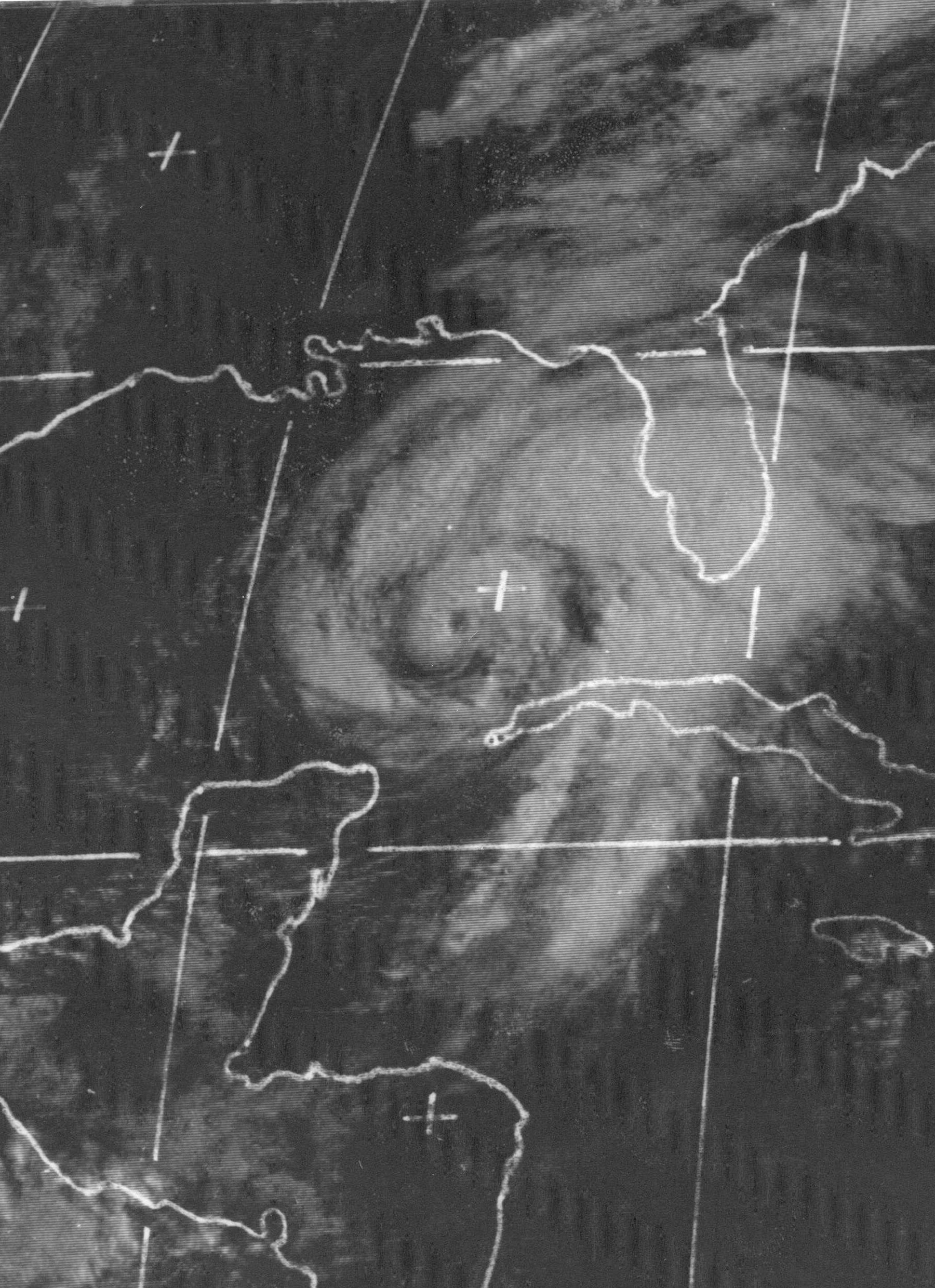
So you yourself may recognize the experience of having many ideas, scenarios, “voices,” situations, settings, etc swirling around in your head. It may happen all the time for you, with high intensity, like a thunderstorm, or be a casual parade of notions passing gradually through and around your direct consciousness like a spring breeze. Probably, like the real weather, it varies from day to day, or even hour to hour.
Such is my own case. And it’s probably a t-storm more often than a gentle rustling of leaves.
The question becomes, how much of this is ripe for storytelling, or writing? I dare say this is where my personal Autism influences matters.
For what inside my mind is potentially valuable or enjoyable to any given demographic in the world? What can be transformed into narrative? What should be?
After all, even to me, much of it is mere “noise.” It’s recalled conversations from years ago, a plan I made but forgot about because I didn’t write it down, an alternative scenario to a past disappointment in my personal life. It all blows around in my mental maelstrom.
Those of course could spawn a great fiction idea. In some ways they have, here and there. Then again, it could end up being impenetrable shit even if I managed to convey the experience to perfection in words. (Infrequent.)
Relationships! In this case, between the energy of my mind and the general reading public as opposed to me as a person to another person. Yet at the core, a patented uncertainty as to the depth of connection between that which is me and that which is another person is still very much in play, as it usually is for those of us on the Spectrum.
Of nearly equal consideration is my own relationship as a writer to that internal tempest of imagery. Long ago I abandoned the attempt to convert every slice of my imagination’s offspring into a coherent story. I believe in writing down thoughts that come to me in a notebook, but I would do almost nothing else for days at a time if I wrote down every single solitary notion that occurs to (intrudes upon?) me in the course of any given day. Triage is vital.
Vital, but not a panacea; I still struggle every now and then with the notion that I am somehow ignoring my next great catalyst for my writing. There is a boatload of random stuff in every mind, and I dare say on average there is more of it inside the mind of an Autistic. It just isn’t all solid material.
(For years I have “seen” a man throw a sword onto the floor of an empty cathedral. Never once has it developed into anything resembling a narrative. Just an image.)
I never really calm the storm. It ebbs and flows on it’s own, sometimes blowing a useful seed into the soil of my writer fields. I carry a notebook with me to catch some of them, just in case. But there’s a lot going on.
Still, for a writer, a better problem to have than being unable to ever see any idea at all.
The Autistic Writer: An Ideal Reader
Author’s are often advised to identify their “ideal reader.”
This aids in both writing and marketing one’s work. In flux but with largely consistent set of traits, an ideal reader is a fictional focal presence within and throughout an opus of work.
And they are not random, or shouldn’t be. An author’s ideal reader should be the result of said author’s careful consideration, study, experimentation, and of course imagination. Some author’s I have read about have the delightful tradition of given their ideal reader a name, to make them more real.
Me? I have no names, but yes, I’ve pondered my own ideal reader. However, (and forgive the redundancy), so far my concept of an ideal reader is less than, well, ideal.
I don’t mean I am writing for an audience of unideal people. I mean my attempts to conceptualize the ideal reader of my fiction have had mixed results. I am aware of such, but as one looking up at it on a mountaintop from a valley, or through a drifting fog. Indistinct.
Once again, my place on the Autism Spectrum at times muddies this water.
Reading and understanding all of the cues and intentions and motivation of real people I encounter comes as a challenge oftentimes. Autistic Folks 101. And because an ideal reader is not a full on character in one of my stories, the requisite level of realism slips somewhat through my fingers. That is because, despite some improvement, I still struggle with perceiving what speaks to whom.
I have identified types of people in real life that seemed like suitable templates for my ideal reader archetype, for a time. As is often the case, however, I appear not to have adequately judged their similarity with me. Ergo, I likely have misplaced them as an ideal reader of my fiction.
Or not, as they case may be. That is the irony; some of the real people I have considered ideal readers may in fact be so, and I don’t recognize it without direct confirmation in some way. That too is a common step in the ASD tango. Yet when it comes to being wrong about ideal readers, or being unaware that I’m right, the result is essentially the same: uncertainty.
And because it isn’t yet complex enough, the audience for each of my books isn’t the same. (Picking and staying in a single fiction genre lane is a topic for another post.)
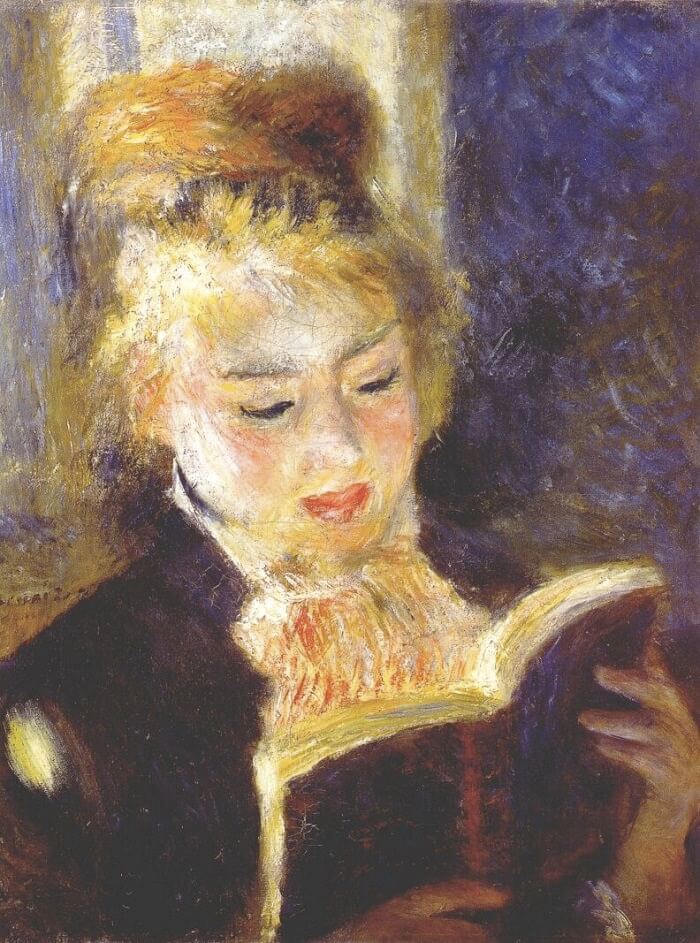
But, for both fun and information, I will describe, to the best I have considered so far, an ideal reader of Ty Unglebower fiction, painted in broad strokes.
I am a cis male, but it feels like my ideal reader is a woman. Which is odd, because I don’t address women’s issues particularly in my fiction. I think this is because the quotations and visions of creative arts that have spoken most to me have come from female artists/writers, though of course plenty of men think the same way.
This ideal woman reader enjoys language, but not at the expense of story. Probably not your standard English professor/Nobel laureate reader. Someone wanting a little extra in a novel, but knows more words than they use or expect others to use.
Realistic and memorable characters matter most to her.
So probably a classic “bookworm.” I write novels that on some level are “bookworm” material, even though I can’t sharpen that definition.
She is quiet, contemplative, not easily manipulated. A reader that wants to get totally lost in a story. Someone that seeks out fiction they will be thinking about when they are not reading.
And for those wondering, no, my ideal reader isn’t necessarily a fellow Autistic. This entire article series is about how my Autism influences my work as a writer, but nothing about my work is designed specifically with Autistic people in mind. (Though, as I have mentioned, I have written one Autistic protagonist so far.)
My author tagline is “I shift the everyday a few inches.” My ideal reader will seek out that shift, explore it, enjoy it in fiction and in life, ponder it and dance with it, but never walk out distracted into traffic because of it.
She drinks tea over coffee, wears those long sweaters librarians often have, with the drawstrings. She considers the crushing or curtailing of the imagination, at any age, among the cruelest and least forgivable human crimes.
She wants to believe in magic, usually does, even if she doesn’t see it, but is always ready to see it. On rare occasion, she may actually see it after all.
And she tries to be better for it, and make others better for it, by advocating always for the essence and power of story and play.
All this kind of stuff matters to her. And to me. Though I welcome any reader that is interested in my novels, I hope most of all “she” finds them, even if I have no idea where she is or how to market to her.
Perhaps she’s you?

 Ty Unglebower