The Autistic Writer: Experimental Fiction
A few years ago I took up oil painting. Actual painting. That is to say no classes or research or practicing of specific techniques. After years of wondering what it would be like to paint with oils on a canvas, I bought the equipment and just started slathering paint on.
I have enjoyed it ever since, though with low funds I have had to pause for a while. (It’s not a cheap hobby.)
Though I’ve learned a few things by repetition, I have still studied nothing about the art. I am an experimental oil painter. Which is exactly what it sounds like. I play around with oils until I get something I like. The reason I can do this is simple: I don’t care about what anyone else thinks about my paintings. It’s one my rare artistic endeavors wherein I have no concern about an audience receiving the product.
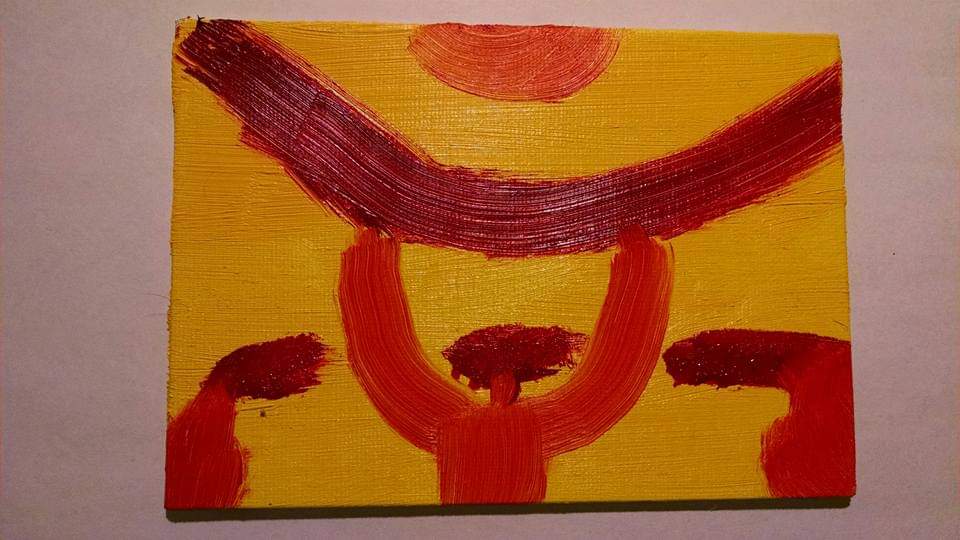
I have almost the same attitude about my poetry. While the poet in me is ever so slightly more aware of a potential reader than is the oil painting side of me, I still give little to no thought about what my poetry means to others as they read it. Again, I can experiment with it, or be conventional when writing it.
When writing fiction, on the other hand, I have to give myself permission to experiment. In fact, only one full work of mine, a novella called The Italics Are My Own can be classified as wholly experimental. As an author of fiction, I have an acute awareness, (even if some say I should not) of what a potential readership might get out of my work.
My place on the Autism Spectrum provides (encumbers?) me with some unique positions on not just story, but language. Concept, not just plot. The above mentioned novella is the closest I have come to writing a book without censoring the mechanics of my Autistic way of thinking, observing and communicating.
Yet I hesitate to conduct such experiments more often in long form fiction, because of my concerns of it being incoherent to the reader. And unlike a free verse poem or an oil painting of pine trees, consumer appeal of my fiction is part of the equation.
Experimentation influenced by ASD vs. Coherence to the general public.
Actually, it’s very much like the concept in every day life of choosing between masking and unmasking my Autistic traits in an attempt to succeed further. By default, whether in life or in a novel I am writing, opening the process up entirely to my Autistic tendencies results in something confusing or off-putting to the general public at first glance.
If a concept for a novel speaks to the deepest me, in the end I won’t refrain from writing it, chaos and all. I just may have to paint a canvas soon afterward to remind myself it’s okay to create things without others in mind.
The Autistic Writer: A Life Worth Writing
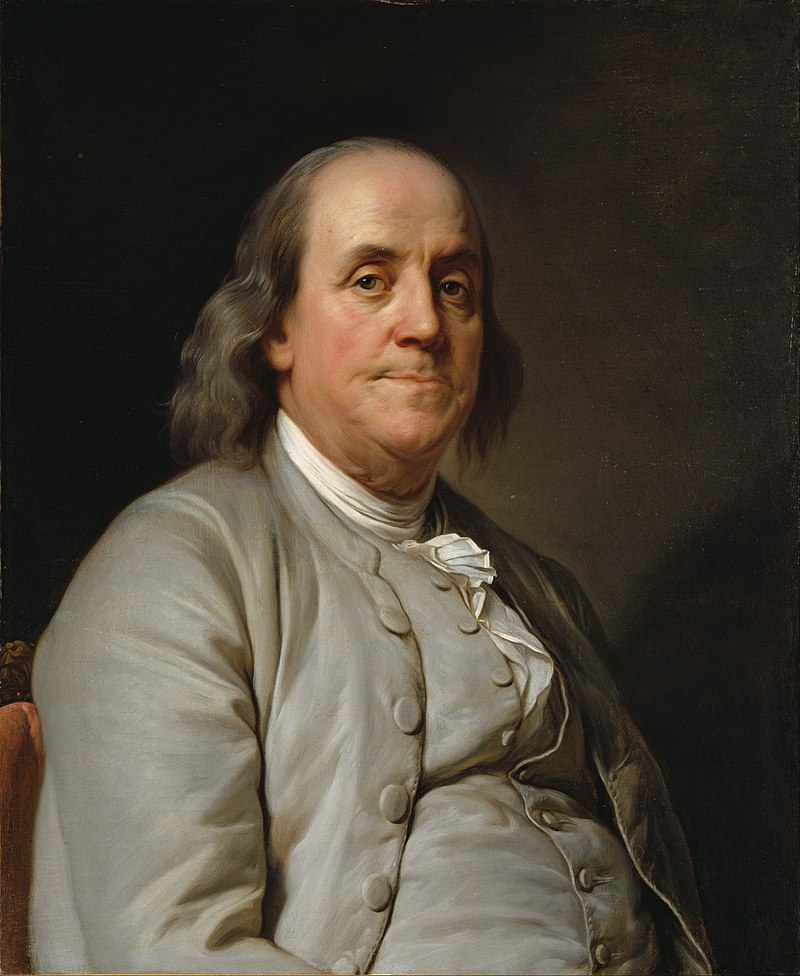
“Write something worth reading, or live a life worth writing.”
Benjamin Franklin is alleged to have said this. Whether he actually did so, the sentiment seems wise. He of course could and did do both, but let’s face it, most of us are not Franklin.
I’m not saying my life has been worthless. It hasn’t been. And there may be aspects of it worth writing about. I’ve written non-fiction about aspects of my life before. And some aspects of my real life influence my fiction; any author could claim that truth.
As a writer on the Autism Spectrum, however, I must always keep in mind that what I may have found interesting about my life may not always translate into what readers may find interesting.
If I am being 100% honest, I have come to the conclusion over the years that compared to the lives of many people I know, I’ve not experienced much in the way of external adventure or misadventure that rises to the level of “readable.”
If you read my previous post in this series about characters, and about being internal, you already know where I am going with this; most people cannot get away with whole books of characters thinking, wondering, pondering. I have lived a life mostly of thinking, wondering, pondering. Even if the conclusions are extraordinary, in most fiction something should happen. The Autism in me in tempted to talk about thoughts all day.
In this regard my fiction has a small edge over my non-fiction. I can create any adventure or obstacle for a story I want. I can build plot around thoughts. Yet I have to make that choice. I have even written fantasy that upon a first draft is too much thought, not enough action. (And fantasy is probably the genre that fails most miserably without enough action for its characters.)
Forget characters for a moment. Even in memoir writing and other creative non-fiction, something should in general take place beyond even great thoughts. A fascinating experience in my head is for the most part not enough. My emotional struggles with, say, loneliness may be profound, but if I can’t present a story by which they are explored, is that writing or, to paraphrase Capote about Kerouac, is it just typing?
Perhaps, however, I’m wrong? Maybe my lived experiences in the real world would not be as boring to the reader as I fear they would be. I am judging by the sort of lives that even some of my non-writer friends have lived who nonetheless fascinate people with their tales. It doesn’t seem that my life can compare.
This may all be a matter of perspective. Deeper dives into some aspects of my life, greater explorations of the nature of same may indeed constitute a “life worth writing.” Or at least it may be more fertile ground for fiction ideas than I realize. Being on the Spectrum often entails misreading or missing social reactions. I can’t deny that tendency might apply to interpreting society’s interest in or esteem for people such as myself.
But it’s no sin either way, to me. If my life ends up being a mediocre story, I will nevertheless remain happy with if I write things worth reading.
The Autistic Writer: Sex
Asexuality, (defined as the persistent lack of sexual interest in or attraction to other people) exists on a spectrum, just as Autism does. Just as there is no monolithic definition that applies to everyone that is Autistic, asexuality cannot be condensed into a consistent list of characteristics.
Recent broad research suggests those with ASD are more likely than the general population to identify as sitting somewhere on the Asexuality Spectrum. I am one of these individuals. In my case, I am not void of sexual attraction or activity, but both transpire only under specific, (and hence less frequent) circumstances with specific types of people.
Furthermore, the pursuit and appreciation of sexual activity is not, and has in essence never been a top tier motivation, or even a temptation in my daily life. It never dictates my decisions.
What could any of this possibly have to do with writing fiction? Quite a bit, in fact, if you consider trends and expectations in Western Culture: sexual attraction is one of the most used, (and most expected) tropes to move dramatic tension along in a story in all of human storytelling.
I do not have a literary agent. I produce my own work for the time being. But not so long ago, agents would advise authors in most genres to add a sex scene into their narrative at least once before agreeing to represent the work. Further down the line of the traditional publishing route, if an agent failed to suggest this, the publishing company would.
A scene depicting characters in a sexual encounter was to many considered a required selling point for a fully formed novel.
This trend has faded to some degree over the years, though I couldn’t guarantee it has vanished. And I have read more than one novel wherein the sexual scene was so poorly placed, and unconnected to the rest of the story I felt certain it was the result of this commandment.

“Spoiler” alert: as of this writing, none of my novels contain a sex scene. They touch on romance, friendship, the afterlife, violence, murder, the supernatural and I hope the inspirational. But nobody has sex within the pages. (Though intimate relationships are at times implied.)
This is not a puritanical stance on my part. Sex isn’t dirty, or evil. It’s just that in my fiction, as in my life, I don’t base much around it. None of the stories I have told so far in my career have required a description of any two characters having sex. Sex isn’t a plot point, and it doesn’t reveal character in my novels, so it is absent.
I particularly have no interest in seeking to describe intercourse in literary terms.
If my characters have had sex, or will, you won’t find me describing it to you, because I don’t write things I don’t want to read. And I don’t want to read such scenes.
“There isn’t a purpose in having a man and a woman and the center of a story, without sexual chemistry,” an acquaintance of mine once told me. It was a singular disappointing and cynical take.
Furthermore, I find many people with Autism, in their own way, want to get to the point of whatever it is they are doing. Some may take the long way round, but they are getting somewhere. I have said before how much we on the Spectrum tend to hate small talk because it gets us nowhere. Disturbing our routine of process at work prevents us from attaining the goal. If nothing else, the depiction of sex, which has never held a commanding presence in my life, would also become a mere distraction that diverted from the point of my stories.
There is also an Aromantic Spectrum, wherein one doesn’t desire emotional partnership, or love. I don’t consider myself on that spectrum at all, and hence you will find some elements of love and romance in my novels, if it relates to defining the character’s arc. Even then, because I am not a romance author, I don’t throw around such relationships amongst characters willy nilly.
You’ve missed the point of this post if you think I want to rid all fiction of sex. Read this again, if that is what you came out of it believing. I won’t even promise sex will never appear in my own fiction in the future, though it really is unlikely. If, however, I am doing my job as an author and storyteller, the reader will identify with the personalities and struggles of my characters as they navigate a worthwhile journey without mentioning sex at all.
The Autistic Writer: Climates
In the hit show Sherlock from a few years ago, the protagonist, (Sherlock Holmes, obviously) utilized his “mind palace.” This was a mental image of a familiar location that aided Holmes in memory and concentration. So developed was his mind within the context of the show that he practically could see the imaginary setting appear around him so he could occupy it.
I have no such powers. Much to my regret, I cannot fully visualize a setting in my mind and feel as if I am there. (I would make use of that ability on the regular if I had.)
Nevertheless, I do have a collection of, “ideal environments” in my mind. And while I can’t put myself into them to the point of them appearing real, my Autistic fixation on such places does comfort and calm me in times of stress or fatigue.
Certain components of these optimum settings for my mind appear on their own at times, like a non-destructive intrusive thought. I can then allow them to develop further, or set them aside if I am not mentally available to savor them. Other times, to a certain extent, I can summon them, or at least the feelings they evoke in me.
Not so much a mind palace, in that it isn’t the same exact setting every time. More like a “mind climate” if you will, that I pass through or contemplate on. The effect is both to reflect what I am at my center, and to reinforce it.
My mind climate is mostly late autumn, or winter. Cool, colored leaves blowing around, a small cottage and a fireplace looking out over a valley of same. Perhaps it is the proverbial steel gray sky of winter, windy and snowy that my essence walks through, hunched over and bundled up on my way to said cottage or room with a fireplace.

In real, waking life I can enjoy warm springs and greenery blossoming. But within my mind climate, where the frequency of my thoughts originates, it is rarely spring and virtually never summer.
To me, this is not a positive or a negative. It is simply one of the inner ways my Autistic thoughts manifest visually.
Which is why I must make particular effort not to set all of my fiction in a climate that matches my mind climate.
Not that doing so would ruin my ability to write solid fiction. Some authors set their tales in exclusively the same climate and weather. You find this a lot with noir writings. (Nordic noir is a thing…wherein almost all of the writing takes place in the winter climes of places like Iceland or Sweden.) The weather is a recurring character in those types of stories. But I don’t want to be constrained in that manner as an author.
The day may come when I decide to confine my fiction only to weather that matches my mind climate. But because I’m not choosing that route at this time, I resist the unconscious tendency I have to always tell stories in the rainy fall or the blustery winter.
But I have to ask myself…if all my characters and stories come from within my mind, aren’t all of them to some degree, born of that autumn in my thoughts?
Perhaps all my fiction contains an element of those seasons after all.
The Autistic Writer: The Five Senses
Many with Autism Spectrum Disorder have a love/hate relationship with their five basic senses. It’s common for one or more of the senses to overwhelm an Autistic person. Other on the Spectrum are numb in more than one of the same. And of course combinations exist: an acute sense of smell and a blunted auditory experience can coexist in the same person. (With the obvious assumption that there are no anatomical deficits, such as deafness, to account for.)
Fully immersive fiction takes the sensory experience into account. This isn’t to suggest that in every scene the author should describe in detail everything the character sees, hears, smells, touches and tastes. That would get tedious in short order. Exploration of sensory inputs though are a highly effective means to enliven a story. So an awareness of the senses is helpful for the author, especially if they are writing characters that do not share their particular sensory input profile.
I am fortunate in this regard. I don’t suffer a near constant sensory overload as many of my fellow Autistics do. Hearing is probably my most sensitive sense, and even then, only in certain circumstances. Sustained loud noises, or simultaneous opposing sounds (think two TVs on at one time) can drive me up a wall.
Because I have a particular awareness of sound as a person, it usually enjoys a strong presence in my fiction. I include dialogue in this category. A common frustration of mine during revisions is finding a way to describe a speech on the page the way I hear it in my mind.
Music would play a larger role in my stories, if not for copyright issues. (Off topic tip to writers: never mention or include the lyrics of a modern song in your fiction. Enough red tape to choke a rhino.) In real life music is a huge part of my mood.
Vision is of equal significance in my writing. I’m a visual storyteller in large degree. I don’t believe in intricate-to-purple prose to describe every sleeve of every shirt on every character in a scene. That is an excellent way to keep me away from a story. Still, despite being a character-first author, I need the reader to have a notion of setting early on.
Without having a specific test to confirm this, I suspect my sense of smell is above average. For all I know, far above. I often must limit my exposure to certain things that don’t bother other people simply because of the smells associated with it. It’s not crippling, but I have to bear it in mind.
I have made a specific effort to incorporate smell into my fiction. It is, after all the most immersive of all the senses, the one most connected to memory. All the same, earlier in my writing life I often neglected odor in my descriptions. I have wondered if this extra effort is required because I unconsciously “censor” what I smell so often in real life. Could my need to be selective about what I can smell have influenced how I leave smell out of my fiction by default?
Touch and taste are the final two of the “Big Five” and the two I call upon the least in my fiction. Between the two, I refer to tactile experience more often. Why? In this case, I don’t even have a theory. I suffer no disfunction in this regard. Like anyone I have certain textures I find unpleasant, but it’s not like they’re forced on me.
Pain is not exactly the same as the sense of touch, but as a sort of cousin to touch, I write about it more than any other true touch experience. (Even then, only as demanded by the plot.)
And taste? I won’t lie, I almost never include it in my stories. When there is eating at all, I rarely go beyond telling the reader if the food was good, bad, or neutral. To be honest with myself, I should include this sense more often than I do. Many books dedicate a large percentage of ink to the nature of meals, even if the meal ends up unrelated to the plot. Truth be told, overkill in the description of food is one of the top reasons I DNF a book.
Like sex, (a tactile topic for a future post in this series) tasting food tends to distract from any story I want to tell, despite the taste of food being one of the most refreshing sensations of my real life.
In the end, the ratio of the senses isn’t vital to telling a good story. But as an Autistic writer I remind myself that my relationship to the senses is atypical, when that of my characters (and readers) in general is not.
Side note: I highly recommend the book A Natural History of the Senses, by Dianne Ackerman.

 Ty Unglebower