Can You Be A Non-Fiction Pantser?
In the world of fiction writing, you’ll often encounter the terms “pantser” and “plotter.” have used them myself on this website before. To remind those who may not know, the former refers to someone who prefers to write without a plan or outline, just flying by “the seat of their pants,” hence the term.
As you can imagine the other term refers to those who make outlines or otherwise chart out the nature of their work before they start, so they can follow this as a guide.
You can imagine many writers fall somewhere in-between.
I tend to be on the plotter side of things, though I do not always have an official outline to follow. (My next novel does happen to have an outline to work from however.)
There are not “plots”per se in non-fiction, though certain history books and memoirs can be written according to a quasi-plot. (Think Capote’s In Cold Blood.)
In that sense, one can be a plotter of sorts as a non-fiction author.
But can one be a pantser for non-fiction?
In technical terms, yes. In practical terms, no.
Anything that can be written can of course be written by the seat of one’s pants. Just dive in and type what comes to you about the subject you plan to address. If you have a subject, in which case you are in stream-of-consciousness territory, which one could argue is the only bona fide way to be a non-fiction pantser.
As a rule however, one should have a destination in mind when writing non-fiction of any length. A theme, or a fact, something you know you are working towards, and in the very least a rough idea of the means to get there. This can and does change in the course of writing, but you are not winging it here; you are following map and deciding on a detour.
Sure, one can pants a non-fiction piece and revise it to perfection later on, just as one would the draft of a novel. But unlike a novel, where truths can be scattered in the confusion and brought back into the fold in whatever way a writer chooses, a haphazard approach to the facts of non-fiction written without a plan just dumps mud in the water.
The temptation is to conflate impromptu pants-writing with genius, or passion. The words just pouring out of your brain.
“How astute you are!”
But unless you state in some fashion, “I had no outline at all for the book your are about to read,” nobody is going to know how much you planned ahead for the idea, and how much just came to you. And to mention this would strangle most readers with the utter pretentious of the thought.
And since you are going to be editing and revising your piece multiple times, (you will be, right?) there will be little evidence of your pantsing anyway. We tend to accept that about fiction..the author’s meticulous calculations of craft and prose to conjure an excellent story. But with non-fiction, particularly of the persuasive kind, we treat planning like a numbing agent, when in reality it is the fertilizer that nourishes our work.
I Will Write A Novel Again
That title might sound as mundane and redundant as it does off and confusing. After all, this is the place where I talk about writing, particularly fiction, on as close to weekly basis as I can.
The post immediately previous to this one mentions ideas for fiction, and whether to follow them. Most of the posts deal with advice of various kinds based my experience as an author.
And not long after the start of 2025 I posted my my clear intention to write a space opera as my next longform fiction project.
Why reassert recently established plans? Because my life itself even more recently drastically and forever changed.
My mother died in the hospital a mere two weeks after I published the last post.
Worse, I feel she need not have died at that time, but for some lackluster medical care.
Though I will likely carry that belief for the rest of my own life, along with my grief, I am not here to detail same. I love my mother, and she me, and she died–you require no deep expertise into the intricacies of the human experience to conclude the nature of what I am going through in broad strokes. And if you have experienced such a loss yourself, you know even more.
I am here to say that I have spent the last several months, as Hospice was discussed, (but never achieved), and after Mom died feeling quite far from any creative impulse. Grief, guilt, weakness, depression, ands other related reactions to losing a loved one conspired to disgust me away from even the notion of writing any more fiction, (or performing any more theatre.)
After all, what is the point of creating if in addition to my usual poor readership numbers, even my own mother will be absent, forever form this life, to directly experience it. (Or experience me creating it if nothing else.)
Writing is draining enough in the good times, when few people care about what you have added to the world. When one of the few people that cared about anything you ever did or was is gone in the earthly sense, why break my back adding color to a world that now lack sufficient amounts of light to even see it with my own eyes?
It seemed quite near grotesque; the idea of being so frivolous as to write my little tales of ghosts or space or murder mysteries. The perpetual void of audience indifference I threw all such completed work toward from a distance was nothing compared to the singularity emerging at the center of my galaxy–dense enough to swallow love and dreams themselves.
In short, who fucking cares about writing? About story? About performing and presenting?
That, at long last, brings me to this post, and title of same.
How did everything change? In sincerity, it didn’t. Not entirely. Everything I said above continues to hang over me as I ponder not only the future of my writing, but the future of my life on Earth itself.
The questions are not answered, the depression not lightening, the fear of failing again no dispelled.
Nor do I know the details of writing another novel right now. It may or may not be the space opera I keep running my mouth about. That could be among the sillier, more useless types of story possible in wake of my status.
Then again, a probing, literary exploration of the darkness of human reality in wake of loss and aloneness, (despite being very much where I find myself much of the time) would seem to parallel swallowing dry stale break whole at this point.
Who knows?
The same question applies to how long the next novel will take compared to previous ones; when I will start, if it will be the final novel or if others will follow for the rest of however long my life is; if I will bother promoting it or not; if I will even publish the thing; will i even feel the same about writing the damn thing whatever it is by the time I’m doing it, as oppose to giving up for good once I know what being in author in a post-Mom world feels like, and whether the end product, should it happen, be worth a damn.
And of course, whether it is still in me at all.
Notwithstanding very little movement in my mood and the plethora of unanswered questions, a mere subset of which I lay out above, I set the intention, on this day, to start/write a novel again. And if I can muster even the minutest fraction of an answer as to “why?” the best I can offer is this:
By pure statistics, I could have as much as four decades or more remaining on this planet before I join my mother in whatever plain she now exists. If I am to get anything at all out of those years, even if only a version or tolerable survival of same, I must embrace mindful processes more than results. This is something I have yet to master and may not master by the time I too am just shy of 84.
I’d like to sound more triumphant than that for you. But my Mom died, and believe or not this all is a far and loud cry from where I was weeks ago.
Today, that must suffice for me, and certainly for everyone else.
How to Know If Your Idea is a Good One
You don’t.
Sorry for the whiplash. Maybe I can soften the blow a bit and amend that be saying I myself don’t know if my ideas are good anymore, if ever I did “know.” So I have little advice to offer you on your own ideas.
For me it’s writing stories and nonfiction books, and of course posts like this, among others. For most of my life as a writer, I have only pursued a topic or a story if I felt it was in fact a “good” idea.
That’s not to say I’ve been off chasing marketing trends for my entire writing career. Sure, I’d as guilty of that weakness from time to time–all creatives are. Yet even as a new writer, I only ever pursued an idea if something about it felt like a truly “good” idea.
That was especially true of my novels, and to some extent, still is.
It came time to sell and market my work. And the short version is, nothing works. I have gone broad and specific. Reached out to strangers and/or friends. I try videos, I try promotions. I offer fiction or non-fiction. Twitter, (when I used it) an increasingly abandoned Facebook author page, more recently TikTok and even more recently Blue Sky have all been homes to various promotional campaigns of mine on behalf of my own writing.
The most recent, and one that I am still technically in active promotion for is my Autism memoir: A Fear of Butterflies. Before that, my most recent novel, The Rubble and the Shakespeare. In both of those cases especially I thought further ahead, and made more plans from more different angles than I did the promotion of any previous works.
In essence, by my own standards (and amount of spoons, for you fellow Autistics) I promoted the shit out of both books, starting before they were even published, as is suggested.
For what they were both campaigns, like all the others, failed.
Yes, perhaps I am still woefully inadequate as a self-promoter, despite my improvements over the years. Nevertheless, what I thought were “good” ideas did not catch on, even a little, with any target audiences.
Luck. It takes luck, and as far as promoting, I have had zero good luck at any point in my decade as an author. It is what it is. It sucks ass, but it is still what it is.
So, have all (and I mean ALL) of my ideas been bad ones? Have I never hit on a notion, a story seed, a character moment to a thesis on life in the case of my memoir that measured up as at least a “good” or “imaginative” idea?
Sales numbers say, no, I never have.
Am I willing at this stage to surrender the notion that all of my ideas are just plain bad? Not yet. Doesn’t numb the disappointment, but I have made an all-too-gradual shift in my perception of my own ideas, and by extension, the ideas of others. It’s what I said at the top of this post. In essence, you don’t know if your idea is “good,” only if it’s potent.
The shittiest of ideas have sold. Some of the best languish in obscurity forever. Luck, money and connections shift the odds only so far in one’s favor. On the whole, I now doubt we ever know.
I am converting to a model of idea presence instead of idea quality. If you idea continues to come to you more than a few times, pursue it. Not because that will lead to external success. I am proof it will not. Still, it’s a better metric by which to make creative decisions than “is this any good?”
The times when an idea will not “leave you alone” are about respecting your inner voice, (or the inspiration from elsewhere whispering to you.
To create is to be the artist. A lot of that blows at first. Yet it’s the answer I now give myself when I ponder if the next idea is in fact a good one.
Neitzsche said “if you gaze long enough into an abyss, the abyss will gaze back into you.”
This, and “god is dead” are the only quotations for Neitzsche I have retained from high school studies.
Neither is encouraging, but I am concentrating on the former now.
It seems I gaze, if not stare into an abyss of creativity most of my waking life. The abyss-gazing in my case consists of my attempts to radiate the warmth and light of the sun of my art out into a universe that quite clearly does not want it much of the time. It is in fact a shadow, a blackness, and total void of passion an interested.
Despite my often mentioned attempts to merely work for the process of it, giving little if any thought to the reception my work will inspire, I can no more avert my gaze from that abyss than an average B-Movie adventure character stuck on top of a precipice could heed the words, “don’t look down!”
Does the abyss stare back into me?
I don’t know. I guess in some ways it does. But unlike the concept I (think) Neitzsche was describing, I gain no further inside into who I am or what I am doing. It is just…an abyss into which I gaze, nay stare for much of my waking life hoping for something that is not there. And if old Friedrich is to be believed, the abyss finds almost the same level of insignificance gazing back into me during the whole affair.
It certainly seems not to pull anything of particular note from me as I sit here now, and ponder it, or when I do so any other time.
Nothing or artistic or literary merit, at least.
Then again, ir probably wasn’t supposed to. But then I wonder if I might be one of the few exceptions to the pronouncement in the first place–perhaps I do gaze into an abyss that does not gaze back.
“Write what you….” No.
“Write what you know,” is the oldest writing advice there is, as far as I can tell.
Did it ever apply? Does it still?
In a foundational, oblique manner, yes. If one has never once thought about writing before now, and is petrified at the prospect of starting, it’s the first light switch thrown in the darkness.
Beyond that initial crossroads of “try writing” and “never ever try writing ever” this well-worn statement is akin to telling a neophyte to chess, “just protect your king.”
Okay, that is the fundamental truth of chess play. Yet even if you lack all talent for the game, (as I do) you’re aware that two thirds of a player’s moves are not connected to protecting the king from direct assault. If “protect the king” is all the knowledge you have, you have nothing with which to work, even though it is the entire point.
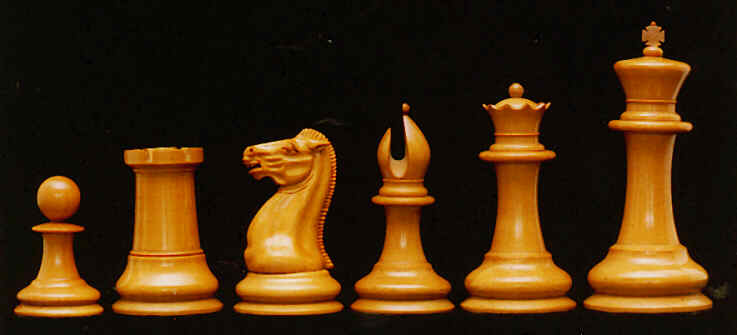
“Write what you know,” is the first shove of the boulder down the hill. Yet knowing something does not a valuable topic make.
This is especially true in sharing our own experiences.
I have found that unless you are precious to the reader, or famous to the world of readers, nobody wants to talk about yourself as a starting/end point of a work. We know about nothing on earth more than our own lives and opinions, yet to focus our writing on this will bore everyone.
A better statement to launch a thousand writer adventures would be, “write what others want to know.”
Now that may be nothing more complicated than reader “wanting to know” the joke of your piece, of the twist in your thriller, or the catharsis moment of your story on a public radio hour. It’s all the same; a writer must provide what the reader wants to know, while remaining true to one’s self. The writing must come from a place of truth, or what one knows, but not simply be a mere recitation of “what you know.”
Now, how does a writer find a truth within them that can be transposed into a truth others want to know themselves?
Let’s put it this way; to continue the chess metaphor, determining this is equivalent to not only telling the chess neophyte to “protect the king,” but to do only in his head, without pieces or a board to keep track.
I wish it were simpler. The good news is, so do you, and in that sense you’re halfway to being a writer already.
What a writer truly knows is, how little they know.

 Ty Unglebower