As Fascism Burns Our Stories, Return to the “Campfire” To Save Them
National Parks. Presidential libraries. Museums. The National Archives.
All are both vital to the health and success of a free country.
And all of them have closed or come under threat by an aspiring tyrant and his billionaire lackey. Who knows what is next?
In these times of encroaching authoritarianism and the evils of the Republican Party as now constituted, the writing, telling, and above all preserving of stories is roughly 5 times more important today in the United States as it was before the Reich-inspired MAGA movement took hold.
And their value was already incalculable.
Depending on who buys what or caves in to the demands and preference of whom, this blog may or may not persist. Obeying Regime 47 in advance has become a popular past time anywhere from entertainment companies, to PBS itself. The time may come when I either have no access to this platform, or the demands of same on my content becomes so great I no longer make use of it.
In which case, it is back to MSWord and the old printer. Failing than the pencil and the paper.
I will burn a damned stick and write stories and thoughts down on napkins if I have to.
And I hope, pray I am not the only one to go to these lengths if/when needed.
If the institutions charged with keep out. hiSTORY alive are gutted, censored or burned up (figuratively and literally speaking) the story of who we are, were, and hope to be needs to be preserved for certain, and it will only be done by the dedicated wealthy or the resourceful poor.
We may take our cues from our past and a different kind of fire–the campfire.
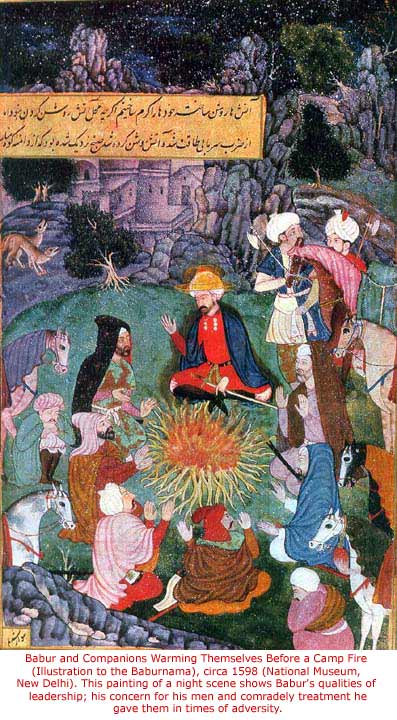
Both facts and the telling of fictional tales must not be forgotten the midst of all of this. The epic tale, told by the village poet or chieftain around the community fire preserved the collective experiences of the tribe. The concept far predates the book, or even paper as we understand it.
Songs. Chants. On and on. They all told what was in many ways a fiction designed to keep alive the sense of wonder, or “more-than-nowness” unique to the human social animal.
When it is exercised that is.
The Fascists, with their gutting of the arts want to prevent such imaginative exercise. Let us make sure we do not allow it, no matter how far back to the Stone Age the try to send 99% of us.
So let the stories continues. Ad let us all familiarize ourselves with other ways of consuming them and telling them. Let us be ready for the campfire epics of history and culture again. not merely for the aesthetic–the natural conclusion to the path we as a nation are on now may require it.
Choose to Imagine
We think of imagination as an experience that comes to us–invading our tedious everyday to explode a mundane moment on behalf of our spirit.
We tend to forget that while “imagination” is a noun, “imagine” is in fact a verb. And like all verbs, in indicates action.
While inspiration or creative revery do exist, (and a wonderful feeling they are when they occur), most of the time we first choose to imagine. Especially as adults, we must make the effort to step into “make believe” as it is sometimes called for the sake of children.
Yet even children decide to imagine. True, they make the choice more often due to their inquisitive nature. They also experience imagination out of nothing, without making the choice, far more often than adults do. Nevertheless even little ones will declare, “this box is a car. This doll is the queen.”
I can’t tell you what to imagine, or even when to do so. Those elements vary from person to person. Time, schedule, health, willingness, experience and aspirations all determine what we choose to imagine and in what manner. The only universal is the decision to imagine in the first place.

The busier, more tired, more disillusioned one is with life and world, the more vital it is imagine. It will fade and store itself in the seldom used aspects of your reality if you wait for it to overwhelm you and your daily compounded tedium.
You must go to it, and you must see the benefits of doing so.
That doesn’t mean to sit in the middle of your living room and scribble crayon drawings of dragons onto old scrap paper all day. (though it certainly could if that’s what you enjoy. ) It means to ponder what is not. It means to transcend. It is to calibrate our thoughts to a greater width and depth of existence than we live day to day.
And, sorry to sound scary, but it is one oppressive governments cannot take from you.
Choose to imagine, every day, if only four five minutes before you sleep. The cost of shutting down your creative mind may just be greater, in the end, than sacrificing it as a result of a busy, tiring, chaotic life.
Shrink the Arts to Save them, and Us.
A dangerous, angry, Right Wing aspiring-tyranny has descended upon the United States once more. Regime 47, having learned some efficiency lessons from a practice round that was 2017-2021 will no doubt be far more effective this time around in implementing it’s dark, discriminating and destructive policies.
It may result in the end of what democracy we had in this country to begin with.
One may not think that brings to mind the arts, but it certainly does. Books, theatre, visual art, dance, all of them. They are all both more important and more under threat today. (As is usually the case in Right Wing movements and authoritarian regimes such as that of 47.)
People far more intelligent, eloquent and influential than me have elucidated the wherefore and why of arts-hate among the MAGA types and other similar ilk. I’ll not retread such discussions here, as I have a more specific point to make. But in short, the more joy, introspection and empathy in a society, the more difficult it is for fascist traits to take full hold.
Censorship of content critical of the acting regime is of course a significant part of this fight, but I maintain that it is the overall spirit of free creativity in our selves and that of those around us that is the greater threat. It is one reason why “patronize and support the arts” shows up on many “how to defeat and survive tyranny”) lists around the world. I encourage you to look into some of those, for more than one reason.
My take here is about scope and budget in this fight.
The first step in choking out the power of the arts is to cut off funding. Project 2025 and other lesser known platforms on the Right call for a defunded of arts agencies such as the National Endowment for the Arts. This should be opposed of course. But the fact of the matter is that we as a society under threat must no longer rely on such institutions to present and protect the arts component in the country.
Nor can we rely on grants and loans as artists like perhaps we could in by gone eras. (Some of us anyway.) By no means should we give up, but as money becomes more scarce both from the government, as well as private donors (some of whom will concentrate their money to other causes, others who may simply be afraid to be known as arts-supporters) the question of funding must move down further and further into the community, the arts-company, and even to the individual.
In short, to keep the arts alive, we must to some extent simplify, and, forgive the phrase, “go cheap.”
Not cheap in sprit or commitment or dedication. I mean literally cheaper price tags. Million dollar venues and productions or presentations with budgets the size of small countries are wonderful. But as they become rare, or at least even further out of reach for the average person than they already are, it is up to us as individuals to double our passion for art even as we halve or quarter or worse our spending.
I mean a greater willingness to self publish works, with simpler design options. We know a book cover helps to sell a book, but to hire the best artists to do so will require most indie-authors to pass the cost on to the reader. Let us make our imaginations more, and not less accessible to those with little or nothing.
I mean theatre companies willing to devote themselves entire to original works from the community, public domain pieces that cost nothing, and fewer but deeper presentations in the course of their season. A decrease in focus on concessions and guilds and fundraising galas, a nd greater attention and commitment to the literal show being produced.
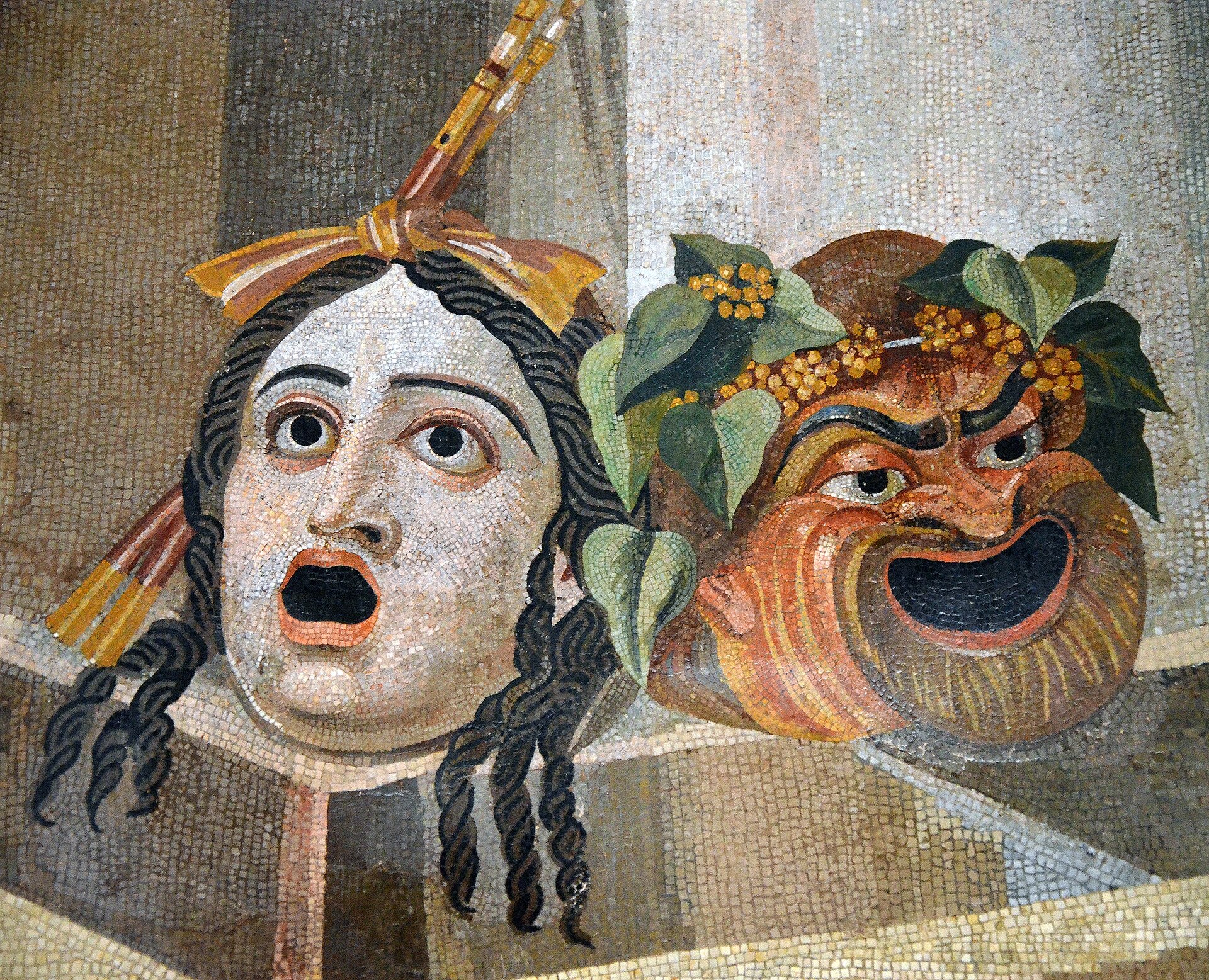
More in-the-park and impromptu productions, with a chair, a bunch of people in their own black clothing, and the memorized script as the pillars. Things that require little to no admission charge in order to make back the cost of the production.
I mean those with space/real estate to spare hosting more events, for more intimate crowds, for free, yes even in your home, if any of those means anything to you.
And we the consumer must also change.
Let’s not expect a full orchestra if a musical at the local school is possible with mere canned background music. Put the cell phones away and be willing to shut up so everyone can here the poetry reading without the sound system that needed replaced years ago.
We must be willing to narrow our attention, our money, our love to the barest most basic nature of the work presented, and not hope to replicate Broadway or the West End every time we decide we want to see a show. (And we must decide we WANT to see a show way more often than we have been, on any level.)
And do not be so damned busy, in any world or the art world, that you cannot take time to truly appreciate the songs, the plays, the book, the painting. Rushing through the arts in not consuming them anyway, but it is particularly unhelpful in the face of cultural annihilation. Produce, write and consume less, but for the sake of building an understanding, and imagination, a community more.
They are coming for the arts exactly BECAUSE it is a means to harvest joy, thought, empathy in even the smallest, least significant crannies of what’s left of our society.
But only if we choose to embrace a new radical modesty in the way we take part in and consume all of the arts.
To have any hope of the arts being a huge component of saving society one day, we, today must be willing to make it as small and accessible, and mobile as we can.
What Is Space Opera, and Why Am I Writing One?
The term “space opera” is a misnomer to many who are not aquatinted with fiction genres. It is not a stage production of grand characters singing arias set in a space backdrop. Such an opera may exist, but I am not well read on the topic.
In the case of space opera, we’re talking about a subset of science fiction.
Actually, this too is somewhat misleading, in my opinion. Every thing has to go in one drawer or another I suppose, but space opera is, as I will lay out, almost the opposite of science fiction.
Sci-fi usually deals with the literal science of a story, often relegating character and even plot to secondary consideration. Pure “sci-fi” concerns itself with the impact of technology and scientific advances on civilization. The fictional advances may be far from anything of which we are capable in real life, but on the whole those depicted in sci-fi at least have a theoretically plausible if highly speculative foundation of what we know of true science today.
Though I do not care for it myself, the works of Issac Asimov fall into the purest of science fiction, as described.
Space opera, on the other hand, despite being a sub-genere of sci-fi, doesn’t usually spend much time on the nature of how technologies work. In fact the science of a space opera may not go beyond mere mention of a machine, or device or medicine. In some cases the actions may not even be possible, as far as we know, in our true universe. (Star Trek’s warp speed is an example, as are it’s transporters, the full scientific details of which are rare addressed within the story, and even then contradict one another at times from story to story.)
I space opera, characters (often but not always) dramatic, over the top types are the focus. As are the political machinations, or wars, or general intrigue of the characters and their societies.
In many cases, a Hallmark Channel-esqe romance or two is also part of the mix.
Happy endings are more common than tragic ones, though that has changed and was never a hard and fast rule of the subgenre.
But yes, they do take place almost entirely in space. As often as not, far from earth or human beings. SciFi can, but does not have to be set in space, and usually examines human populations.
space opera’s scope tends to be much larger, with exploration and visitations to many planets and exposure to many words and species a common characteristic. It may or may not be of epic length as a novel, but it trends longer than average as far as I can determined.
On screen, Star Wars, and the previously mentioned Star Trek are two prime example of space opera fiction. To those of a certain generation, so is the tv series Babylon 5 from the late 1990’s.
All by way of saying, I’d be happier if “space opera” were just its own genre, and not under the sci-fi umbrella. I feel the same way about alternate history fiction, but that’s another topic.
My next novel will be a space opera.
At least, it will adhere to the style points of space opera more than it will those of any other subgenre I know of. Being me, of course, I will deviate from those when I choose.
Usually when I announce the start of a novel, I indicate when to expect to finish it and publish it. In this case, I have no such prediction. I have an outline, and that tells me it will quite possibly be my longest novel to date. (Though probably still on the shorter end of the spectrum when it comes to space opera as I have no intention of making a series.) This one will be ready when it is ready, in other words. It’s a new type of project for me.
So why am I taking it on?
In short, the challenge of it. I have never done it before, and while there are plenty of things I would never do just to challenge my writing, my genera enjoyment of Star Trek encouraged me to try something on a grander scale than my usual.
I was also motivated by the ease of describing the project in these early stages. If I say, “I’m working on my first space opera,” those who follow the genre, or those who simply know what that entails (as you now do, readers) will right away get a sense of what I’m up to. That will also help when marketing and promotions come round, at whatever far off date that may be.
My fiction tends to be insular, even when amazing things are happening with the characters. One city, one small group of people. A handful of characters. That’s been my M.O., even when I set a fantasy novel in the afterlife. (Though There Is Pain Here is the novel with the largest scope to date, it isn’t space opera. Afterlife Opera?)
So I will play with more characters, more locations, and probably more than one subplot. I am not in love with subplots as an author. Read the story I give you as a through line. I tinker with smaller diversions in some of my work, but this project almost demands subplots, and it will give me a chance to work on my skill in developing them.
So there are several reasons I am writing this. But the most significant is still probably the first one I mentioned; I’ve never done it before, and want to challenge myself a bit, even if most of my space opera consumption is TV and movies as opposed to novels.
Meanwhile, I will spend more time on short fiction this year, submitting and sharing.
To 2025 in imagination, and beyond.
Holiday Repost: Yes, Virginia, There Was a Writer
I will be shutting down regular weekly posts for the year as we spin into the holiday season. In truth, I do not see myself posting regular weekly posts next year anymore; it is tiring to have none of them read for years upon years. That very notion makes this holiday repost of an essay I wrote some time ago all the more poignant. In it, I delve into the importance of a writer showing up, even when it is not for credit or fame. Fame, I am probably okay without for now. But to have nobody read what I write is becoming, as each year in my live comes to an end again, more and more difficult to accept.
I wrote an entire memoir about this sadness over being unable to convince people to buy into my and my work. I hope you will give that a read.
In the mean time, below is the repost of my piece from years ago. I hope you enjoy reading it once again.
See you next year…—Ty
Due to it being the most reprinted newspaper editorial in the history of the English language (verified), most people, regardless of their faith, are familiar with this piece, known now to history as “Yes, Virginia. There is a Santa Claus.”
Unsigned at the time of its publication in The Sun in 1897, it was of course written in response to a letter received from eight year old Virginia O’Hanlon Douglas. Though over time there has been some amount of scholarly doubt as to whether or not an eight year old actually penned the letter bearing her name (appearing as “Virginia O’Hanlon” in the paper), the woman to whom the letter has been attributed lived a life that was rather well documented. Her Wikipedia page, as well as other more legitimate sources cover her life in plentiful, if not meticulous detail. Virginia herself received fan mail for the rest of her life, to which she graciously responded. She indicated near the end of her life that the attention she received as a result of her famous letter had effected her life in a positive way.
Several movies, animated specials, and other works have been created that tell the story of Virginia and her letter. She has become a rather integral part of the Christmas zeitgeist. At least in the United States.
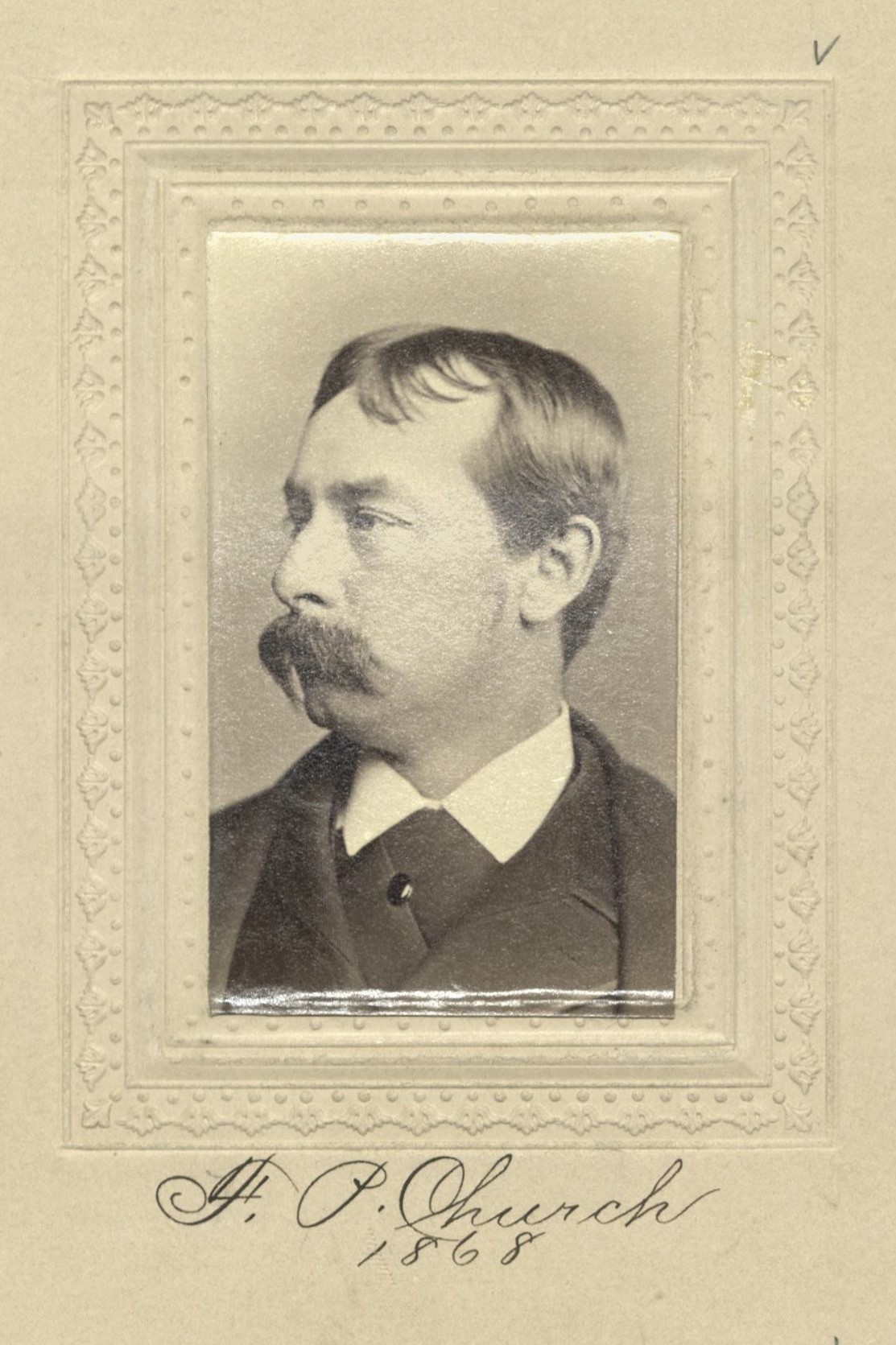
Coming in a distant second to Virginia in this story, in regards to eventual fame, scholarly investigation, dramatic presentation in various media, and inspiration to generations of Christmas lovers? One Francis Pharcellus Church. Who was he? Nobody special. Just the man who actually wrote the editorial itself.
I don’t want to go on and on about that. But I did think it worthy of mention that the author of the words which move so many of us that love Christmas, and the work of whom sparked the most popular editorial of all time seem almost to be an after thought.
“Oh yeah,” folklore personified seems to say. “He took care of that whole writing part of the Virginia story.”
Folks, nothing against Virginia, but in the end Mr. Church was the story. Mr. Church is the story.
Yet his section of the link I provided is basically just his picture. His Wikipedia entry merely mentions he wrote the piece, where he went to school, that he died childless and where his body is buried. It’s barely longer than the piece for which he is (not so) famous.
Now I am not beating up anybody over this. Virginia deserved some attention and admiration. However I do confess it has over the years annoyed me a bit that though it is Mr. Church’s work that instantly captured that hearts of millions, it continues to be Virginia’s story.
So, that being said, allow me, on this Christmas Eve of all days, to talk a little bit about what this work of Francis Pharcellus Church says about him, and about writing.
Set aside how famous it is. Really think about the piece. The prose is eloquent but concise. Touching on a multifaceted and deep spiritual truth in a manner that is accessible to an eight year old without boring an adult reader. It both confirms the truth about “Santa Claus”, without blowing the mystique of Santa Claus. It upholds the magical in a child’s Christmas experience without telling one single lie or half truth. On top of it all its magnificent diction makes it perfect for easy recitation or performance.
In other words, it is a brilliant piece of writing that accomplished its mission. And far, far more.
There is much we will never know about the circumstances of Mr. Church composing this editorial. We cannot know what exactly Mr. Church was thinking when he wrote the piece. We probably have no way of knowing if it was assigned to him as opposed to being a request he made to write it. And certainly his muse, like those of all us writers, will remain a mystery. Certainly more of a mystery than what Virginia went on to do with the rest of her life.
Still I think we can make a few assumptions safely. It is safe to say that this was more than a staff writer cutting his pay check. There is a superior quality of soul within the words. I find it hard to accept he didn’t believe each and every one of them as he wrote it.
Safe, also, is the assumption that Church had no idea of the impact he was about to have on an entire nation’s holiday experience over the next hundred-plus years and counting. Anybody who sits down to pen something with that as a goal needs to be locked up someplace.
He did know, as we know, one thing; he was a writer. It was his job to write, and to do so well. To live up to the standard’s expected of him by his employer and by himself. Pursuant to that, he sat down (as so many of us have before and since) with a goal, a resource, his experience, his talent, and his words. And he penned something. Something to which he could not (or would not) attach his name originally. And as a result of his gift for words, he changed not only Virginia’s life, but millions of others. Perhaps even Christmas itself to some degree. And all of that would be true whether or not the “Virginia” letter was really written by an eight year old.
This is why I write. This is why I seek out places and opportunities to make use of this talent I apparently have to assemble words in such a way as to effect, inspire, change, entertain, inform, provoke, and perhaps on occasion save other people. It is why I chose to be a starving freelancer for now. (Unless some perfect staff writing position should show up.) It is why I do my damnedest to write even though I know that nobody is reading. Why, despite a hiatus here and there I muster up within myself time after time that exhausting, that perplexing, that frustrating, that miraculous and inexplicable component within my spirit that accounts for me being a writer.
This stuff isn’t easy, folks. But it can be worth it, when you get it right. Even more worth it when the right people read at the right time what a writer composes. Just as they did for Francis Pharcellus Church. Just as they still do 113 years after he submitted it to the paper.
Was that ubiquitous yet beloved editorial a fluke? Did Church merely get lucky, and strike a cord or two, or a million? Maybe. But I think not. He was, as history tells us a “veteran” journalist, which means he had been writing large amounts of copy for at least quite a few years. That experience may have sharpened him and his words over time in just the right way to make his tapping into the consciousness of a whole culture more likely than it otherwise would have been. But that isn’t being lucky. That’s showing up. We get rewarded for showing up.
Thus far I have shown up to write far more often than I have been rewarded for same. And I get weary of it. Sometimes I even step away for weeks at a time. But the knowledge that showing up can lead to that one moment, article, sentence, speech or novel that changes everything eventually brings me back to the bottom of that hill, ready to push that bolder ever upward. I wonder if Francis Pharcellus Church ever felt that way.
As I mentioned, we know Church died having had no children. But did he? If children be extensions of ourselves and our love, while also taking on a life of their own as time goes on, I say perhaps the man did have at least one child. That child was an unsigned editorial in the September 21, 1897 edition of the New York Sun. And look at how many children, of all ages, it has touched in the decades since.
All because there was once a writer who showed up.

 Ty Unglebower