The Rubble and the Shakespeare: Extended Blurb
Over on my Facebook author page, (yes, I still use it, and would appreciate any new followers), I recently posted the official “blurb” for The Rubble and the Shakespeare. That is to say, the tight, concise, industry standard sub-120 summary without spoilers. Arguably the most important piece of marketing aside from the cover, it usually appears on the “jacket flap” of a hardback, or the back cover of paperbacks.
It is the “elevator pitch” of the publishing world.
And I hate it.
No, that’s actually too strong a sentiment. I don’t hate it. I wish it weren’t necessary, but it is what it is.
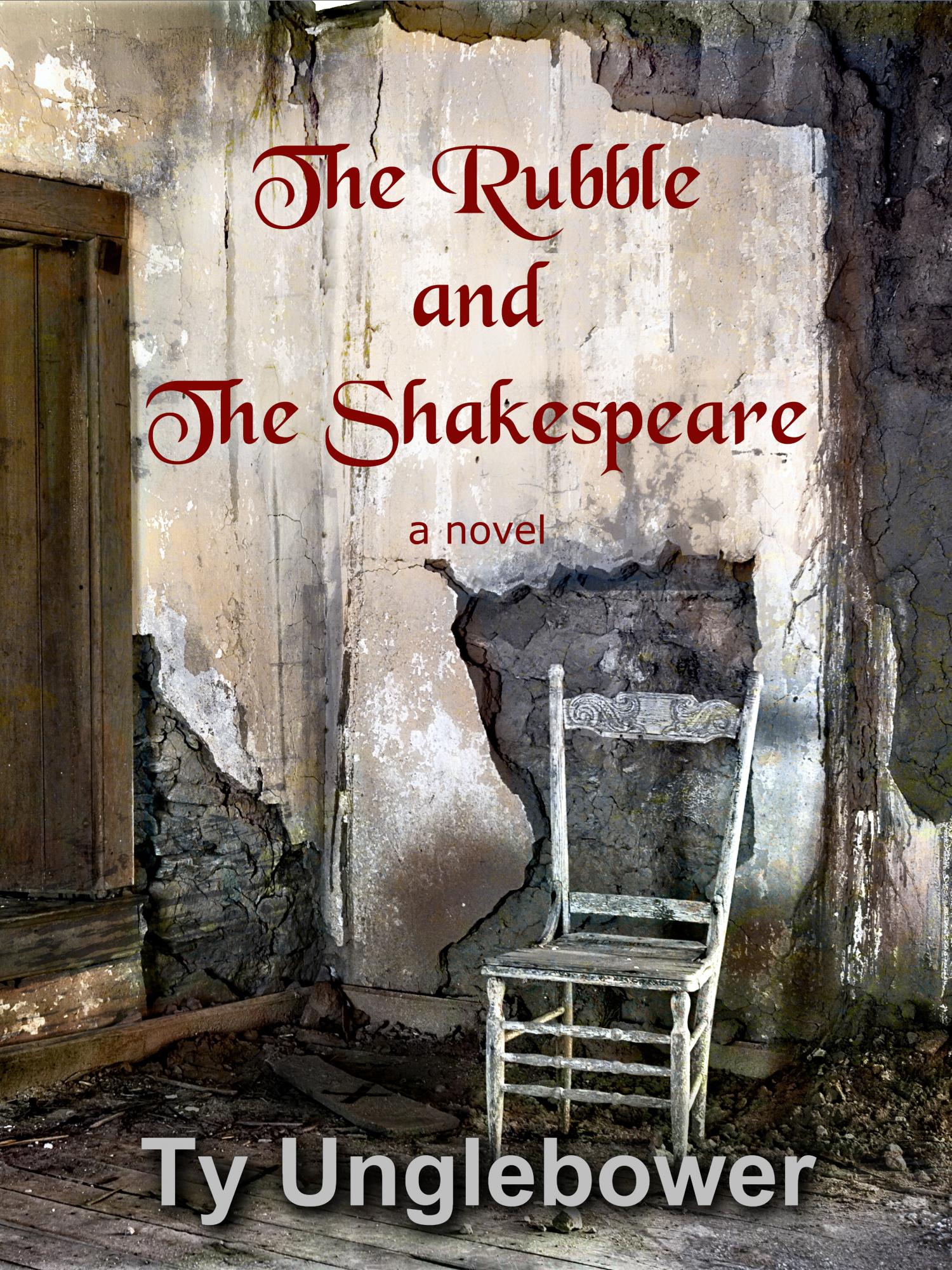
This, however, is my own website, where I am free to use some more words to describe the novel. Those that want a slightly more detailed overview of it, (still with no spoilers), this post is for you:
The setting is an unnamed country. I wanted the freedom to not set the story in a particular area, though it certainly borrows certain aspects from other real-life nations and regions.
Timeframe: consistent with the mid 1990’s, though no year is given.
This country spent most of the previous century under a tyrannical government, referred to as “The Regime.” As the novel opens, a successful revolution a few years previous ousted the Regime and installed an elected government. Overall things have improved, but the rebuilding of cities other than the capitol city has been slow, starting with downtowns and working its way to the outer neighborhoods.
The story takes place in one of these outer parts of the city, where major signs of the war remain, even as people try to live their lives. Hence the “rubble” aspect of the title. There’s a lot of it where our story takes place.
Dimitri is the protagonist. In his 40’s now, and a curmudgeon in the making. He, like many, was evacuated from his home during the initial conflict, and moved to other, safer parts of the city, where the free government had seized control and taken over buildings for refugees. Dimitri now lives in what was once a hotel, on a modest government pension for survivors, as do most of his friends and acquaintances.
He walks with a limp due to a bad knee he injured during the conflict, and has difficulty moving around quickly, or getting one of the few public jobs that are trickling into the area.
The Regime forced him to be a building safety inspector due to his talent for math and science in school, but there is no longer a place for him in that field under the elected government.
So, like many refugees in their own city, Dimitri survives. Gets by. Looks for work when he can, but otherwise has few options.
The story begins when his longtime friend Otto comes to him with a box of books that would have been banned under the Regime. Copies of The Tempest by William Shakespeare. Otto, it seems, is going to try to stage this play, possibly the first Shakespeare in generations in that part of the world. But he needs Dimitri’s help, mainly in finding a safe structure to perform in.
The cynical-but-well-meaning Dimitri agrees to help due to how fond he is of Otto, though privately wonders if there isn’t something better Otto and others could be doing with their time. At Otto’s insistence he reads The Tempest; he finds himself confused more often than inspired by the text, though he tries to understand.
Problem after problem and obstacle after obstacle pile up around the production like the debris around the city, and Dimitri’s initial single day of help turns to days, and then to weeks.
Derelict buildings. Eccentric and unreliable actors. A public unused to theatre of any kind. A whole host of potential issues that have yet to even reveal themselves. Dimitri would do just about anything for Otto, but does it make sense to put up with such struggles for a long-banned and forgotten play in a city still half in ruins?
The Rubble and the Shakespeare will be available as an ebook starting November 27, 2023.
- Posted in: Writing
- Tagged: fiction, friendship, Shakespeare, therubbleandtheshakespeare

 Ty Unglebower