Launch! My Novel is Now Available in Ebook Form!
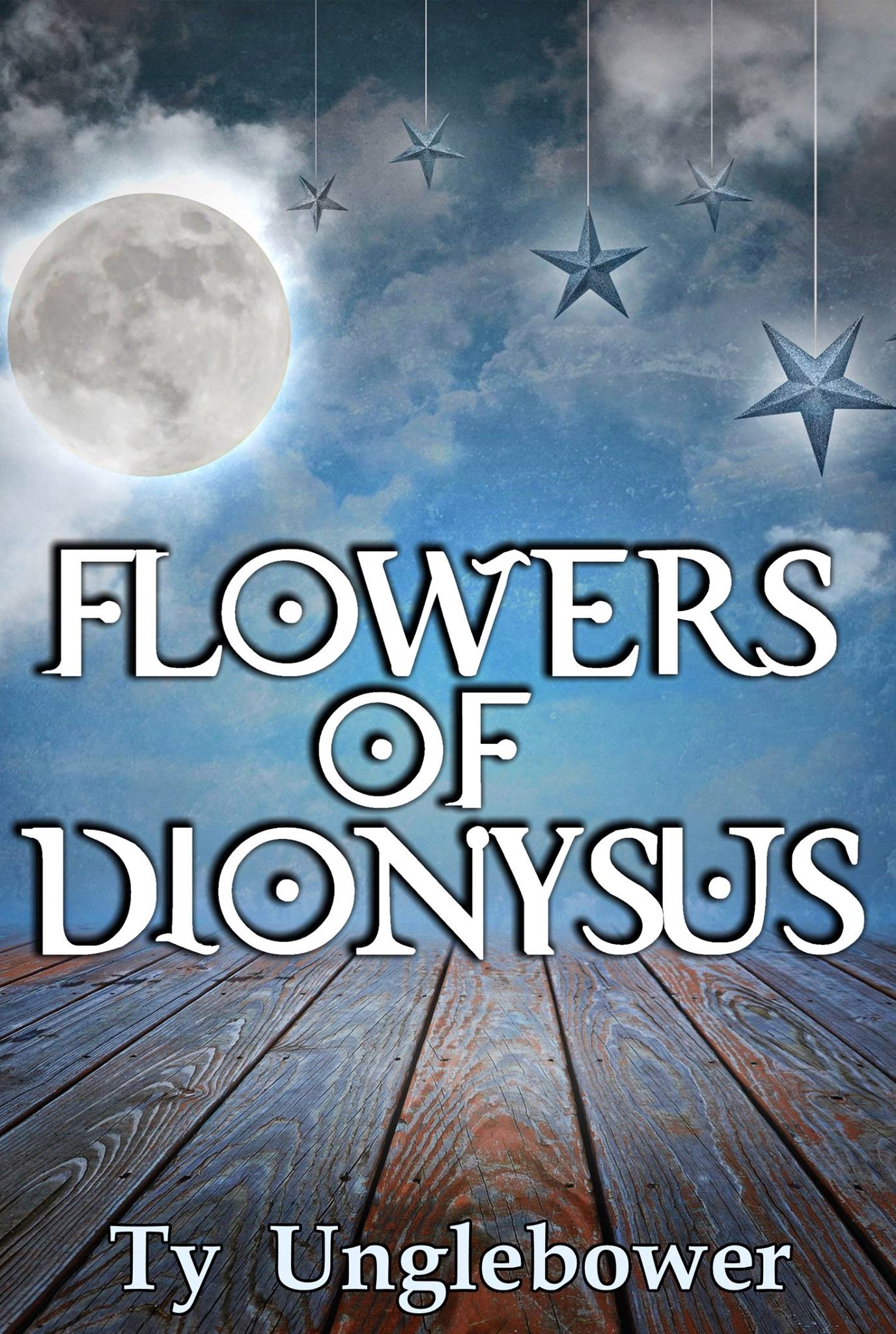
You’ve seen me mention it, analyze and worry about it, share details with you about the process and introduce you to the characters and the setting. It’s been more and more the topic of my blogging and conversation in the real world in the last two weeks. And now, at this moment, it is official: Flowers of Dionysus, my contemporary fantasy novel about community theatre is available for purchase, for $2.99 USD. So please go do so, as I would very much appreciate your reading the story, and being moved by same.
For you Kindle types, the book is for sale on Amazon. Click here.
If you are an Apple person, you’ll want to follow this link instead.
For other formats to read on various different e-readers, head over to Smashwords, and buy what you need.
For those of you who would prefer to hold a paper copy in your hand, this option is not yet available. However, I am considering the possibility of a print-on-demand option sometimes before the end of the year, so stay tuned for that possibility.
And of course, if you do purchase a copy and enjoy what you read, please do an indie-author the best posible thing you can do for them and their work; please leave a positive review of the novel on your preferred medium, or on Goodreads. The book is listed there.
This of course will not be the last time I mention this novel, and the chance to buy it. But for now, I thank in advance all of you that follow this blog for listening to m write about the novel, and especially thank you to those who plan to buy/read it yourself.
The journey begins for my first novel. I hope you’ll be a part of it.
Lawn Care Metaphor
Last summer, a dead tree in our yard had to come down. Medium-sized. Some family with the right equipment came over and cut it down into larges pieces, leaving the pile of wood that has recently been an apple tree in a pile in the backyard.
One thing led to another, and I never got around to renting a chainsaw as I planned to do, to get the tree into even smaller pieces. Over the course of the year, I was unable to mow the yard in that area, obviously. So weeds and all kinds of fun stuff grew threw and around it.
Yesterday, I finally got around to doing something about the situation.
I haven’t proceeded in the most efficient way possible. I’m using an old “sickle-like” tool to hack away at the tall weeds just enough to give me access to the chunks of dead tree. Just enough so I can (hopefully) see any snakes and/or other creatures before they see me as I walk. Then I reach my gloved hands into the woody entanglement, yank a few times, and some piece ot the other eventually comes free of the pile. I drag the piece to another part of the yard, and returned to the weed garden, to continue the inefficient hacking with the ill-suited tool, until I can reach more huge pieces of the tree.
Every so often I rake the dead grass and smaller twigs into a pile, which I plan to deposit into a container at some point.
Like I said, grossly inefficient way of undertaking this project.
Yet, progress has been made. About half of the heretofore avoided woodpile in the weeds has been removed. Plus, it’s good exercise for me.
Why do it this way? Because it was time to get on with it, and it’s what I had available to me. No chainsaw this week. No weed wacker. I had a rake, this sickle thing, and a determination to get on with it. And I’m getting on with it. If I had better tools to do it right now, I’d use them. I may try to find some this weekend. But if not, I’m still proceeding in the slow, tiring manner of the last few days.
I don’t mind mentioning that something occurred to me as I was doing it; it’s a lot like my life so far. I have gotten things done, slowly, eventually, after much exhaustion and without the proper resources. Here and there I have had what I needed, but much of the time, I’ve been hacking my way through the weeds.
I won’t pretend I don’t get sick of it sometimes. It would be nice if once i a while someone would lend me a weedwacker, or at least come help me out with their own cheap sickle-thing. But until/if that happens, I have to believe I am slowly but surely going somewhere worth going.
Library Sessions
This may seem hard to believe, but until last week, I had almost never done any writing in the library. Or reading, for that matter.
This was true even in college; I very rarely studied in the library itself. I just couldn’t get into the proper groove there.
Last week, however, I opted to shake up my routine a bit, and I took my ancient laptop over to the local branch library, about five minutes where I live. How did it go? Somewhat to my surprise it went well, and continues to go well.
Sometimes it got too noisy, what with kids and such, but otherwise, the concept of writing in the library at this point in my history is going better than in previous times I’ve tried it.
Granted, I think on average I write fewer words per session at the library than I do at home, at least so far. That may improve. The key seems to be in the “downtime”. Whereas at home if a paragraph isn’t coming I may wonder around the room, or the whole house, or take a short break and do something else, at the library, all I really do when I am not writing, is sitting there in front of the laptop for a few minutes. I don’t have internet on the laptop when I go to the library, so all I am doing is either writer, or, not writing. And when i am not writing, I am more focused on getting back to it, because it’s the entire reason I left home with all of my equipment in the first place. It would be a bit of a waste to go through all of that only to abandon the writing once I got there. (And I don’t leave my laptop unattended.)
Not that my mind doesn’t wander sometimes at the library. But even the wandering is shorter, and less intense. My very presence at the table in the library narrows my field of thought to the point that letting my mind wonder every few sentences is actually a bit helpful. Though wandering can sometimes be deadly at home, I’ve found that working at the library is actually somewhat enhanced by the frequent, short mental breaks I take. Less gets done, but the quality of what gets done doesn’t really suffer, so it’s a net gain to me.
The library is closed on Friday, so I went to a local coffee shop/cafe on that day to do some writing. That was less productive. It was more noisy there, and though many a written word has been born in places such as that, (more than one person had a laptop open when I was there) my early sense is that I’ll get much more out of a library session than a coffee shop session.
Most of my writing will probably still be done at home, if I had to predict. Still, opening myself up to taking at least a small session of my writing work outside to the nearby library has contributed to my feeling like a writer who invests his time and energy wisely. Walking into a library and knowing what I will be working on gives me a sense of “writerness” that one can’t under estimate. Feeling as though one’s day, or at least a few hours of it revolves around the act of writing reflects back on the writer in a positive way. It says, “I’m here to write. This is what I do.” In my case, I’ve found that a brief drive to the library enhances the effect, for now.
Ten Days Out for Flowers of Dionysus.
Ten days from today, on the 21st, I will launch my first novel, the community theater based story called Flowers of Dionysus.
Writing and editing are of course done, and for all intents and purposes the technical stuff is completed as well. If I pushed a bit, I could probably launch it any day now. But I am sticking with the 21st, because that’s what I’ve been saying all year. Sometimes it’s good to keep with your plan, if there is no pressing need to change it.
What else can be said at this point? I suppose I could share the all important “one sentence” summary of the novel. Experts insist an author must have one, after all:
Before giving up the stage for good, a disillusioned actor joins a friend’s troubled summer production, during which he and some of his cast mates experience odd encounters and supernatural phenomenon that will challenge their views of theatre and of themselves.
I’m still not convinced that if you fail to come up with a single sentence summary, you have failed to write a good novel. I’m not in love with some of the conventional promotion wisdom out there. Nonetheless, I accepted this challenge, and I feel I’ve succeeded in capturing the spirit and purpose of my novel.
Yet what else can I say, ten days out?
I’ve given a more detailed overview of the novel’s purpose here before. I’ve talked about the novel’s setting and explained why I chose such a location for this story. Last year I wrote and published a collection of short stories that took place in the exact same setting, as sort of a build-up. (That collection, Thank You For Ten is still available. On Apple too.)
Plus, I’ve introduced you to each of the five point-of-view characters already: Matt, Marcus, Tanya, Centauri, and LeMay.
You’ve even seen the cover.
I’ve tweeted links to each of those posts, and will to this one. I’ve tweeted thoughts about writing and publishing this novel that weren’t connected to a blog post.
This novel has been a major part of my creative life for more than six years. And now, I’m only ten days out from making it available to all of you. To the world.
You’d think I’d have something poetic to say about all of this, ten days out, but I don’t. I will of course mention it again right before launch, and try to tasteful promote the book on that day and into the future. I’ll do my best to interest new people into buying the book and telling their friends about same. I may or may not succeed to my expectations and aspirations with that. But ten days out, if you follow me on Twitter and your read this blog, and if you are a personal friend of mine, there is not much else to be said. I have either intrigued you by now or I have not.
And of course I hope I have. If so, you’ll be able to find out what all the fuss has been about. You’ll find out about price and links and a few other things regarding my first novel…exactly ten days from now.
I Am Not Freddie Mercury
My singing voice is a bit rusty these days. I used to sing more often, and have even appeared in a few musicals. Plus the occasional karaoke night. I’ve been told that with practice and work, I would have a “very good” singing voice.
When in top form, I can even hit a few high notes. (For a guy, anyway.) I remember once during a break in rehearsing some play or another at a theater, a few actors were goofing off on stage, singing Bohemian Rhapsody. I chimed in, (in appropriate pitch if I may say so) with the part that goes, “…if I’m not back again this time tomorrow, carry on, carry on.” I nailed it, given the informal nature of the sing along. Compliments and laughing followed.
A few minutes later one of the women in the cast came up to me, and of my section of the Rhapsody said, “You’ve got a nice voice.” Before I had a chance to thank her, she added quickly, “It’s not as good ad Freddie Mercury, though.”
Imagine being on say, a third date with someone you are really connecting with. It’s been a great evening, and you both stop and rest on a park bench to take in the warm, orange twilight of a waning summer’s day. A small fountain burbles nearby, birds tweeting here and there. Not the most profound moment of your lives, but quite pleasant. Then a stranger with a dog approaches, greets you with a warm, “Hello. Nice evening, isn’t it?” Before you say, “Why yes, it is,” he lets his dog squat right in front of the bench to take a big shit. Then he and the dog walk off without a word, leaving the steaming gift right in front of you and your date.
That’s pretty much how it felt to be told I had a nice voice, yet also reminded I was not Freddie Mercury all in one breath.
Honestly, why harsh someone’s mellow like this? Why qualify a nice compliment about a fun, informal and impromptu display of musical talent with a reminder that I am not, in fact, one of the most unique, talented, and celebrated vocalists the world has ever known? I mean, Freddie Mercury, think what you want of the man and his music, but by any objective metric he almost single-handedly rewrote the very concept of rock showmanship. And that’s setting aside his stupefying vocal range and clarity. And he did it for years in fronts of crowds of one hundred thousand people or more. And yet you find it necessary to let me know, just in case I was unaware, that my rendition of a few bars of Bohemian Rhapsody in front of seven people in a mostly empty community theater in West Virginia can’t possibly measure up to that?
Thanks, woman who is pretty, but who will never have a body or face like Scarlett Johansson. (I did not really say this, relax.)
No, I am not Freddie Mercury. And I don’t just mean that literally; I also do not have talent equaling that of Freddie Mercury. I have no problem saying this. I don’t feel my entire musical ability should be judged by that goofy sing along that night, and with some time to get back into peak condition, I feel confident that I would be a good singer again. Yet I could practice all day and night and never, ever be Freddie Mercury level in my vocal prowess. Got it.
But I never said that I wanted to be, or that I thought I could be. I was a dude singing with some people one night, and I did it well. I wasn’t trying to blow anybody away, only to have fun and sound good. I think I achieved that.
There’s an old expression, “Don’t make the perfect the enemy of the good.” In other words, don’t dismiss something of decent quality or effectiveness by concentrating on the fact that it is not the best possible outcome. Forgive the redundancy of this statement but, being good is, well, good. Being great is wonderful when it happens, and each of us probably has some greatness inside that we will bring to fruition in our lifetime. But being good in the meantime is not falling short of greatness; rather greatness is exceeding that which is admirable and well done and appreciated by a few yards or more.
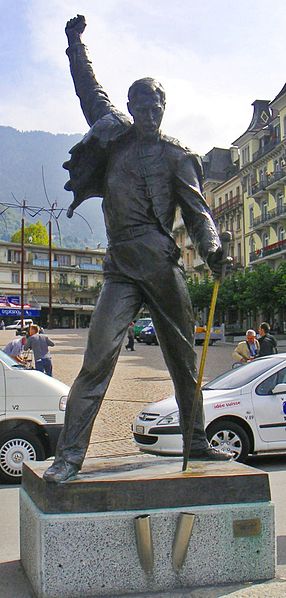
Not a statue of
Ty Unglebower.
I feel this about reading and writing. As readers, we often want a novel to transport us to another state of consciousness, to be so engrossing, so transcendent in nature that we are no longer reading but experiencing a work of fiction. The result not only entertains us, but moves us, and changes our lives. I don’t know about you, but most novels I read do not attain this stature in my life.
Yet I have read some fine novels! I have enjoyed, laughed at, thought about and been inspired by all kinds of fiction over the years. Yes, once in a while, I have had the transcendent feeling, but mostly I experience pleasure. Simple, uncomplicated pleasure, when I find a book I enjoy. That needs to be enough most of the time, because if I go into every novel hoping for and even expecting a life changing absorption into the author’s world, I’m going to spend much of my time as a reader let down.
Yet this expectation of greatness, this “chasing Freddie Mercury” if you will can be even more dangerous for writers. If we write our stories with the ultimate goal of changing society, or being immortalized, we’re not going to get much done, other than perhaps driving ourselves crazy. It’s okay in the back of our minds to hope that something we write will one day touch millions, or be seen as some kind of definitive work, but it mustn’t be our constant driving force. Greatness cannot usually be predicted or manufactured. And even some forms of greatness are temporary, lasting for a few years, and then fading away from collective memory. It takes the greats of the great, (or the luckys of the lucky) to have the greatness live on for decades or more.
By the way, it’s also okay to just write what you think and hope will be a good work. Maybe you don’t set out to alter society with your novel. Maybe “all” you want is to produce a work that will entertain, make people think, laugh or cry for a while. Maybe you just want to write a novel that the reader loves to consume in the moment. Maybe you just want to be thought of as a “good writer.” That’s acceptable, and indeed is probably the wise way to approach our craft. Greatness will come to whom it comes. Just write your story. Sing your song. Play your part. “Consider it a challenge before the whole human race,” that you ain’t gonna lose.

 Ty Unglebower